








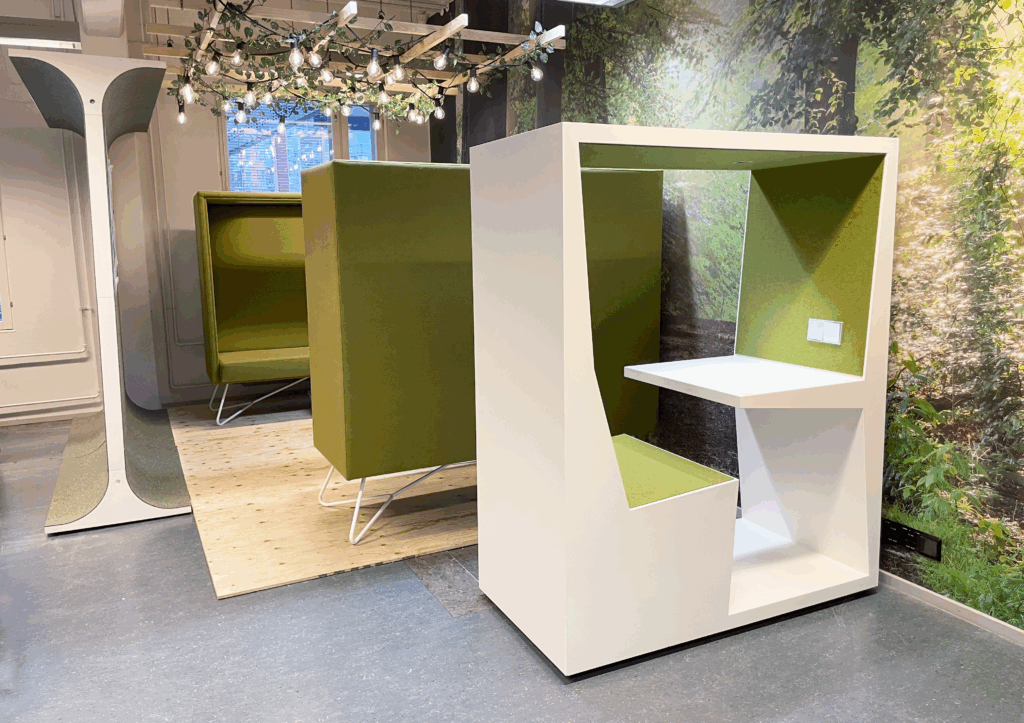
Sound insulation prevents sound from moving between spaces, while sound attenuation reduces the volume and echo of sound within a space. Soundproofing acts like a wall to sound, preventing it from passing from room to room. Silencing in turn, absorbs sound and reduces its reflection from surfaces, improving the sound environment inside the room.
What do sound insulation and sound attenuation mean?
Soundproofing and sound attenuation are two different methods of solving sound problems in the working environment. Soundproofing focuses on preventing sound from passing through structures, while soundproofing improve the internal acoustics of a room by reducing echo and sound reflection.
Sound insulation works by creating a physical barrier to sound waves. It prevents conversations, phone calls and other sounds from escaping into adjacent spaces. This is particularly important in situations where privacy is required, such as confidential meetings or telephone calls.
Sound attenuation, on the other hand, deals with sound within a space. It reduces the reflection of loud sounds from walls, ceilings and floors, making the space more comfortable and reducing stress. Good sound attenuation improves speech intelligibility and reduces distractions.
How do soundproofing and sound absorption work in practice?
Soundproofing is based on the use of mass and tight structures to prevent the passage of sound. Heavy materials and airtight structures effectively prevent the passage of sound waves. The heavier and tighter the structure, the better the sound insulation.
In practice, soundproofing is achieved by using a combination of thick walls, doors and windows. All seams and gaps must be carefully sealed, as even a small gap can significantly reduce sound insulation. Double wall constructions and special materials further improve insulation performance.
Sound attenuation works on the principle of absorption. Soft and porous materials absorb sound energy, preventing it from being reflected back into space. This reduces echo and makes sounds clearer and more pleasant.
Textiles, acoustic panels and other absorbent surfaces are used for sound absorption. Materials are strategically placed on walls, ceilings and even floors. The more absorbent surfaces in a room, the better the sound absorption.
When do I need soundproofing and when do I need sound attenuation?
The choice depends primarily on whether you want to prevent sound transfer between rooms or improve the sound environment within a room. Soundproofing you need when privacy is important, and sound attenuation, when you want to reduce disturbing sounds inside the room.
In open offices, sound attenuation is usually a priority need. There are a lot of people talking, writing and moving around. Sound attenuation reduces the disturbance of these sounds and improves working peace throughout the room.
In meeting rooms and phone booths, you need both solutions. Soundproofing prevents confidential conversations from being heard outside, while sound attenuation improves speech intelligibility inside the room. POD rooms combine these features, offering both privacy and good internal acoustics.
When furnishing an office, it is important to recognise the specific needs of each space. For quiet work, you need a soundproofed space, while areas that require collaboration benefit more from soundproofing. The right solution will significantly improve employee comfort and productivity.
Which materials are suitable for sound insulation and sound absorption?
Suitable for soundproofing heavy and dense materials, such as concrete, brick, metal and thick sheet materials. Sound absorption, on the other hand, requires lightweight and porous materials, such as textiles, foam and special acoustic panels.
In sound insulation, the mass of the material is crucial. The heavier the material, the harder it is for sound waves to vibrate. Steel plates, concrete walls and thick plasterboards make excellent sound barriers. Air gaps between structures also improve insulation performance.
In sound attenuation, the structure of the material is more important than the weight. Open-cell foams, mineral wool and textiles absorb sound energy efficiently. These materials convert sound energy into heat, preventing it from being reflected back into the room.
Mixed solutions are often used in working environments. Partitions can contain both sound-absorbing and sound-absorbing layers. Acoustic panels combine functionality with aesthetics, while specialised furniture such as PODs offer a comprehensive solution for both needs. The choice of materials has a significant impact on the comfort and functionality of the working environment.
Understanding sound insulation and sound attenuation helps you to choose the right solutions for each situation. Both methods improve the quality of the working environment, but they meet different needs. A soundproofed room ensures privacy, while good sound attenuation makes the room comfortable for all users.