







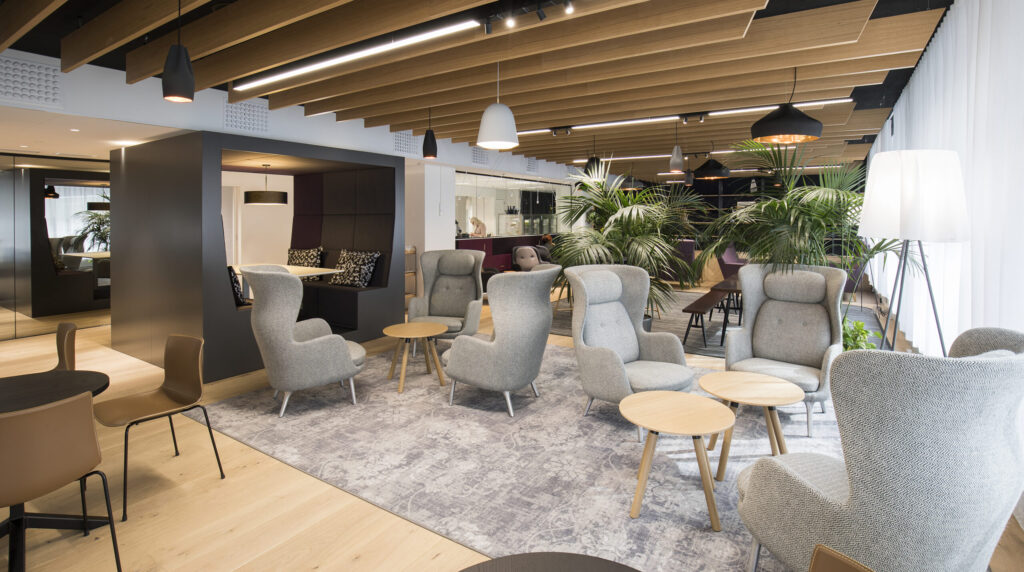
A soundproof booth improves concentration in the workplace by creating a peaceful environment where noise and distractions are significantly reduced. The chatter, phone conversations and background noise in open-plan offices interfere with the brain's ability to concentrate on demanding tasks. When an employee moves to a soundproof booth, they gain a private environment where they can think effectively without constant interruptions.
Why does noise interfere with concentration in an open-plan office?
Noise in an open-plan office makes it hard to focus because our brains are constantly processing sound stimuli and trying to find patterns or anomalies in them. When we hear telephone conversations or colleagues talking around us, our brains automatically start to follow these stimuli and try to understand what is being said. This distracts us from the task at hand and impairs our cognitive performance.
The most common distractions in open-plan offices are telephone conversations, conversations between colleagues and background noise. Unexpected noises and varying sound levels are particularly distracting. For example, a telephone at a neighbouring workstation that rings at regular intervals will almost certainly break your concentration. The brain begins to count the seconds between sounds. and try to predict when the next disruption will occur.
In the same way, a broadcast heard on open radio attracts attention. The brain tries to understand what is happening and what will be said next, which prevents deep concentration on demanding mental tasks. This constant processing of stimuli consumes brain resources and significantly reduces work efficiency.
How the brain reacts to the sound environment
The key to concentration is not complete silence, but rather a steady soundscape that does not cause the brain to search for anomalies. The steady hum of ventilation in the background can provide the brain with stimulation without interrupting its thought processes. However, if the ventilation system includes, for example, a fan unit that clicks at regular intervals, that clicking sound will disrupt concentration.
In a multi-space office, very different tasks are performed in the same premises: telephone work, teamwork and work requiring concentration. Working with different job profiles in the same space reduces concentration and work efficiency, which has led to the need to create separate support spaces for performing different tasks.
How does a soundproof booth reduce distractions?
Soundproof booth reduces distractions by creating a physical barrier to sound waves. The structure and materials of the booth are designed to dampen noise from outside and prevent sound generated inside the booth from spreading to the surrounding environment. This two-way sound insulation ensures a peaceful working environment for both the cubicle user and other office workers.
The operating principle of sound insulation is based on the reflection and absorption of sound waves. The wall structures of the cabin prevent sound waves from passing through, while the materials used on the interior surfaces dampen echoes. This combination creates acoustic workstation, where speech transmission values are low and concentration improves significantly.
High-quality telephone booths belong to quality class A in standard SFS 5904. The speech transmission index (STI) is measured at a normal speaking voice between 0.10 and 0.15, which means that speech intelligibility outside the booth is poor. When speech transmission is unclear and individual syllables, words and sentences are difficult to understand, this ensures the necessary privacy for both the user of the booth and other employees.
Material choices and structure
Effective sound insulation requires careful material selection and structural design. The exterior of the cabin, wall structures and interior surfaces together form a whole that minimises sound transmission. The density and thickness of the materials affect how well they prevent sound waves from passing through.
Furnishing the office with soundproof booths provides a concrete solution to the noise problem. The booths can be placed in central areas close to users for ease of use. When an unexpected call comes in, the phone booth can be accessed within a reasonable time without disturbing others.
What are the benefits of a soundproof booth for well-being at work?
A soundproof booth improves well-being at work in many ways, in addition to improving concentration. Stress is reduced when employees have the opportunity to retreat to a quiet space when needed. Constant noise and distractions increase stress levels, which in the long term reduces both work efficiency and overall well-being. Soundproofed room provides a sense of psychological security and the opportunity to control one's own working environment.
Productivity improves when employees can focus on demanding tasks without interruptions. Deep concentration enables more efficient work and better results. Privacy is increased, which is particularly important for confidential phone calls or meetings. Sensitive discussions with customers or colleagues can be held in the cubicle without worrying about others overhearing.
Workplace harmony, or the lack thereof, is a very personal issue for many people. Most employees understand the importance of peace at work and its significance for staff well-being and, consequently, for the company's productivity. The sense of security that comes from having a peaceful environment has a positive effect on both work motivation and the general working atmosphere.
Privacy and confidentiality
A soundproof booth enables confidential matters to be dealt with at the workplace. Human resources discussions, customer calls and financial negotiations require privacy, which an open-plan office cannot provide. A booth creates a secure space where sensitive matters can be dealt with professionally and without disruption.
Who is a soundproof booth best suited for, and in what situations?
A soundproof booth is best suited for employees who perform analytical tasks that require concentration, participate in remote meetings or make a lot of phone calls. Creative work benefits from a peaceful environment where thoughts can flow freely without external distractions. Taking breaks in peace and quiet also improves recovery and stamina during the working day.
Different user groups benefit from cubicles in different ways. Analysts and programmers need long periods of concentration, during which interruptions are particularly disruptive. Salespeople and customer service representatives make numerous phone calls every day, which disturb others without a separate space. Managers and supervisors need privacy for confidential discussions.
A good rule of thumb is one phone booth for every 10–20 people, plus additional POD rooms according to employee profiles. If there is a lot of group work at the workplace, larger meeting rooms are needed. If employees need to concentrate for longer periods of time or meet with customers frequently, a more diverse selection of different types of rooms is needed.
Different types of boxes for different needs
Single-person phone booths are ideal for quick calls and short periods of concentration. They are compact and take up little space, which means they can be placed in several locations around the office. Two-person booths are suitable for one-on-one meetings and small discussions. Larger meeting booths are suitable for team meetings and customer meetings that require more space and comfort.
The cubicles can be furnished according to your needs. Sofa modules create a comfortable environment for creative work or informal meetings. Adjustable tables enable ergonomic working and can further increase work efficiency. The right furniture turns the cubicle into a multi-purpose space that serves different work situations effectively.
Soundproof booths offer a concrete solution to noise challenges in open-plan offices. They improve concentration, increase well-being at work and enable efficient working in a variety of situations. When booths are placed correctly and there are enough of them, they transform the office into a functional multi-space office where every employee can find a space that suits their needs.