







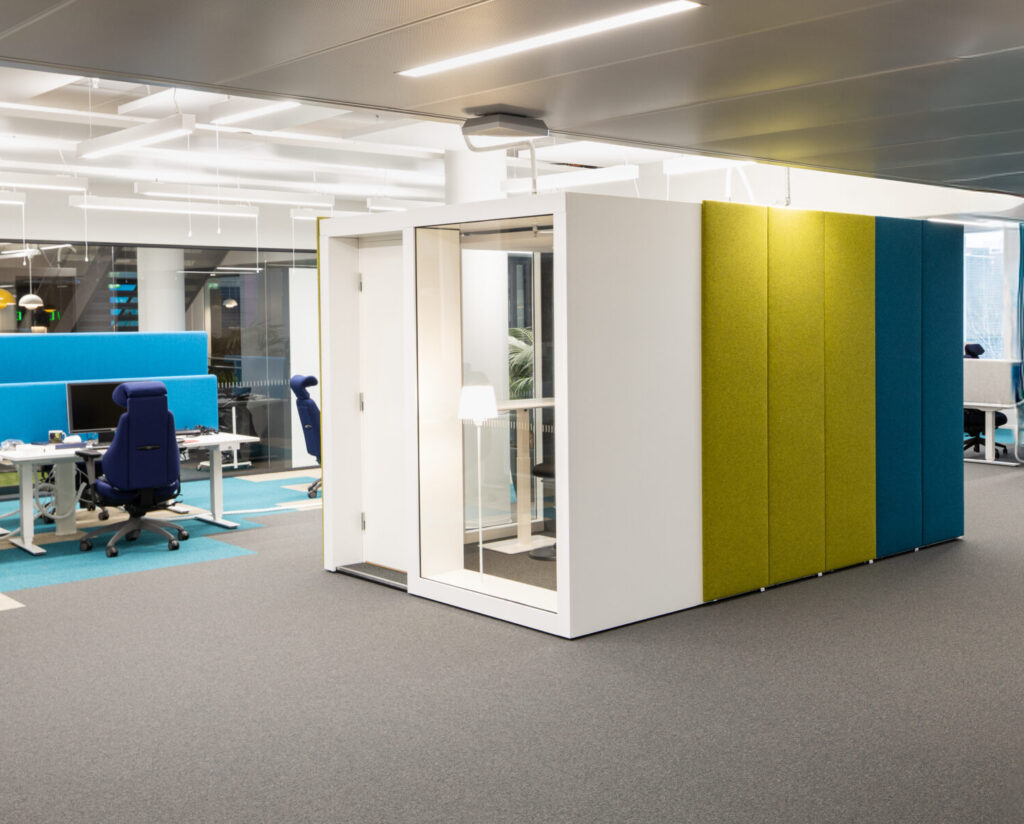
Individual workstations reduce noise in the office by creating physical barriers to sound using acoustic materials and structural solutions. Room dividers, telephone booths and acoustic workstations absorb and isolate sound, preventing noise from spreading in open spaces. These solutions improve concentration and peace of mind by isolating employees from distracting noises and creating quieter working zones.
What causes noise in open-plan offices and why does it interfere with work?
Noise in open-plan offices is mainly caused by telephone conversations, conversations between colleagues, equipment noises and constant movement in the room. The clicking of keyboards, the sounds of printers, doors opening and closing, and the chatter of other employees create a constant background noise that interferes with work that requires concentration.
Noise directly affects employees' concentration and productivity. When the brain has to constantly filter out background noise, cognitive load increases and energy is spent on things other than the actual task at hand. Demanding mental tasks, such as analytical work or developing creative solutions, are particularly affected by disturbances.
On a psychological level, constant noise causes stress and impairs well-being at work. When employees are unable to control their environment or find a quiet space to concentrate, they feel frustrated and exhausted. A lack of privacy and security impairs the ability to have confidential conversations and reduces the sense of control over one's own working environment.
How do individual workstations function as noise barriers?
Individual workstations reduce noise combination of acoustic materials and physical structures, which both absorbs and insulates sound. Acoustic panels and fabrics absorb sound energy, reducing echo and preventing sound from reflecting back into the room. At the same time, compact structures and walls form a physical barrier that prevents sound from travelling through the workstation.
Room dividers create visual and acoustic protection in open spaces. They divide the space into smaller zones and block direct sound paths between workstations. Acoustic materials in room dividers reduce echoes and improve speech clarity in your own work zone.
Telephone booths and acoustic workstations offer a more enclosed solution. These spaces are designed to effectively insulate sound both inside and outside. The Speech Transmission Index (STI) measures the intelligibility of speech outside the space, and high-quality telephone booths achieve a low STI value, ensuring that private conversations remain confidential.
These solutions create quieter work zones where employees can concentrate on demanding tasks without constant background noise. Physical isolation from noise sources combined with sound absorption improves both the peace and quiet of the workplace and the ability to make phone calls and hold meetings without interruption.
What is the difference between open and closed individual workstations in terms of noise control?
Open solutions, such as acoustic screens and room dividers, offer partial protection against noise by dividing the space into zones. They reduce direct sound transmission and block sightlines, improving concentration and enhancing the sense of privacy. Room dividers are flexible and easily adaptable, making them suitable for spaces where the layout changes frequently.
Open solutions are well suited to situations where slight acoustic improvement and visual separation are required, but complete sound insulation is not necessary. They work best at reducing general background noise and structuring spaces, but they do not effectively block stronger sounds.
Enclosed telephone booths and acoustic workstations offer significantly more effective noise control. Completely enclosed walls, ceilings and tight structures create an environment where external noise does not interfere with work. A low speech transmission index ensures that sounds from inside also remain inside the booth, enabling confidential conversations.
Closed solutions are essential in situations where complete concentration or privacy is required. They are ideal for video conferences, phone calls and tasks that require deep concentration. The downside is that they require more space and are more expensive than open solutions.
What factors influence the acoustic efficiency of an individual workstation?
Material choices play a key role in acoustic efficiency. Acoustic panels and fabrics absorb sound energy, while dense building materials prevent sound from passing through. The thickness and density of materials directly affect how well they dampen different frequencies. Thicker and denser structures insulate low-frequency sounds more effectively.
The seals and joints in structures are critical to overall efficiency. Even a small gap in the structure can significantly reduce sound insulation, as sound easily passes through even the smallest openings. High-quality telephone booths and acoustic workstations are designed to take into account the importance of seals in doors, wall joints and penetrations.
Design has a major impact on acoustic performance. The shape, size and internal acoustics of a workstation determine how sound behaves in the space. A space that is too small can cause unpleasant echoes, while a well-designed space combines sound absorption and insulation in a balanced way.
The layout of the office affects how much external noise the workstation is exposed to. The proximity of noise sources, traffic flows and distances to other workstations should be taken into account when deciding on the layout. Ventilation design is also important, as poorly implemented ventilation can create its own noise or impair sound insulation.
How should individual workstations be positioned in the office to achieve the best acoustic results?
Optimal placement begins mapping noise sources and taking distances into account. Telephone booths and acoustic workstations should be located far enough away from major sources of noise, such as communal meeting areas, coffee rooms and main corridors. At the same time, they should be easily accessible so that employees can use them naturally as part of their work.
Taking traffic flows into account is essential in creating a functional whole. Workstations should not be located on main traffic routes, where constant movement disrupts work. The space should be easy to navigate so that employees can find the facilities they need without unnecessary searching.
Combination solutions with other acoustic elements maximise noise control effectiveness. Room dividers can control sound and create zones within which telephone booths offer complete isolation. Acoustic panels on walls and ceilings complement the function of individual workstations by reducing overall reverberation in the space.
A comprehensive space concept takes into account the needs of different types of work. Quiet work areas should be separated from collaborative areas, with individual workstations acting as a buffer between these zones. When spaces are designed to support different ways of working, employees can choose the environment that best suits the task at hand, which improves both productivity and well-being at work.