





Can you tell us briefly about yourself and your background in design?
My name is Frédéric Tomat. I am an architect and a partner at Serau Architectes & Ingénieurs Associés. Our office is located in Paris, France. I have been part of Serau since the very beginning, and today I lead the office together with four partners.
Serau is a unique architecture and engineering company that combines both architectural design and technical expertise under one roof. This structure allows us to manage complex projects that require high precision and close collaboration between disciplines.
Our team includes around 15 in-house professionals, and with external consultants and partners, we work with about 20 to 25 people in total. We also have a sister company called Sepia, led by my wife, Virginie Ravallec, which focuses on interior design and custom furniture pieces. Sepia, run by my wife Virginie Ravallec, Sepia focuses on interior design and bespoke furniture.

Frédéric Tomat, architect and partner in Serau Architectes & Ingénieurs Associés
What kind of projects do you design?
Our projects are mainly private buildings. Because we work with engineers, we often design very technical buildings such as laboratories, clean rooms, and defense-related facilities that require a high level of security. We have also designed sports facilities, schools, and office refurbishments, but our focus is now more on high-technology and secure projects.
What is the most meaningful project you have worked on?
For me, research and development (R&D) buildings are always the most interesting. They are very technical and allow us to use all our skills. We have done R&D projects for L’Oréal and for Thales, a large French defense company.
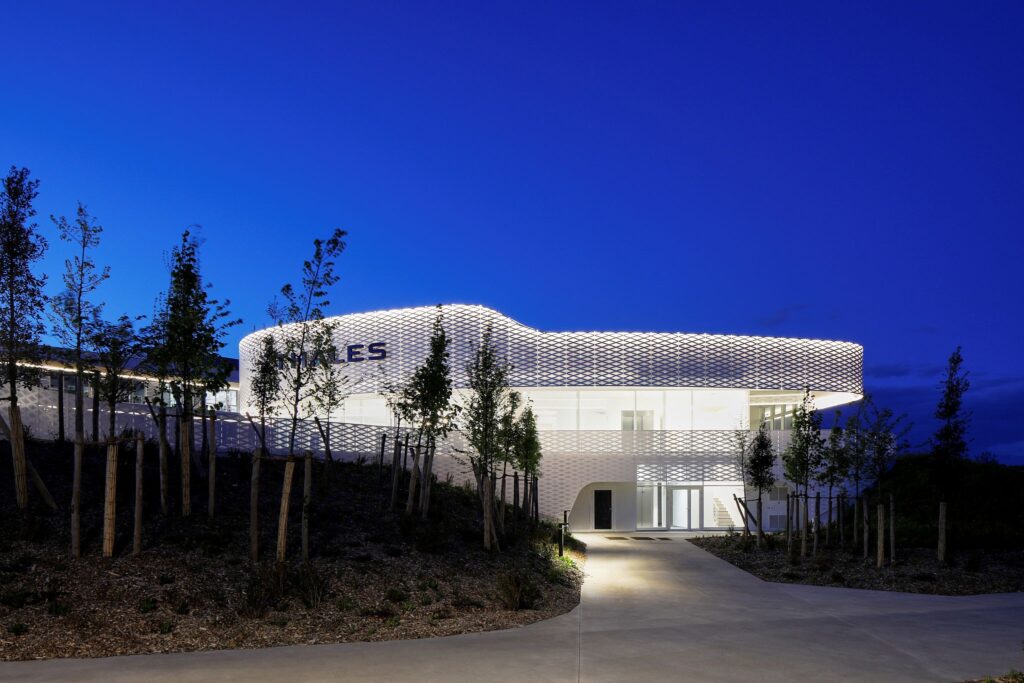
The Thales building is one I am particularly proud of. It combines very high security with flexible and pleasant workspaces, which was not easy to achieve. The goal was to create a place where people would enjoy working while meeting all the strict safety regulations. The feedback from users has been very positive, which is the most rewarding part.


How important are sustainability and environmental responsibility in your work?
Sustainability is now important everywhere, also in France. But I feel that for many clients, it is often driven more by regulation than by personal ambition. The environmental laws are strong, and they guide most projects, especially when it comes to land use and refurbishment.
I believe these regulations are necessary, but sometimes they limit creativity. Every project is different, and I hope that in the future we will be able to adjust sustainability goals on a case-by-case basis, so that each project can reach its full potential and even inspire others.
How have office spaces changed in the past 10 years?
We have worked on many office layouts, so we have seen a lot of change. COVID was a big accelerator. It showed that people can work from home and still be productive. Before the pandemic, flexible offices were seen as experimental. Now they are normal.
People expect comfort and a good atmosphere at work, like at home. They want nice furniture, materials, and colors, not just white and grey walls. Companies also realized that they need to offer attractive workplaces to compete for young talent. Younger generations value happiness and balance more than long careers, so offices must support that.
Workspaces have become more open, collaborative, and adaptable. Teams work more horizontally now, with less hierarchy. Designers and furniture makers also offer new concepts that help architects create spaces for teamwork, focus, and communication.

What is your view on artificial intelligence and technology in design?
AI can be a helpful tool, but we should not depend on it too much. Architecture should not only be about speed and efficiency. We already live in a world that moves too fast. Architects should help society slow down, think more, and design with purpose.
I prefer to train young architects and let them learn through real work rather than asking an algorithm to do the job. For me, the value of design comes from human thinking, not from automation.
We will be publishing new parts of the designer interview series each month. Subscribe to our newsletter to receive upcoming interviews directly in your inbox as soon as they are published!