








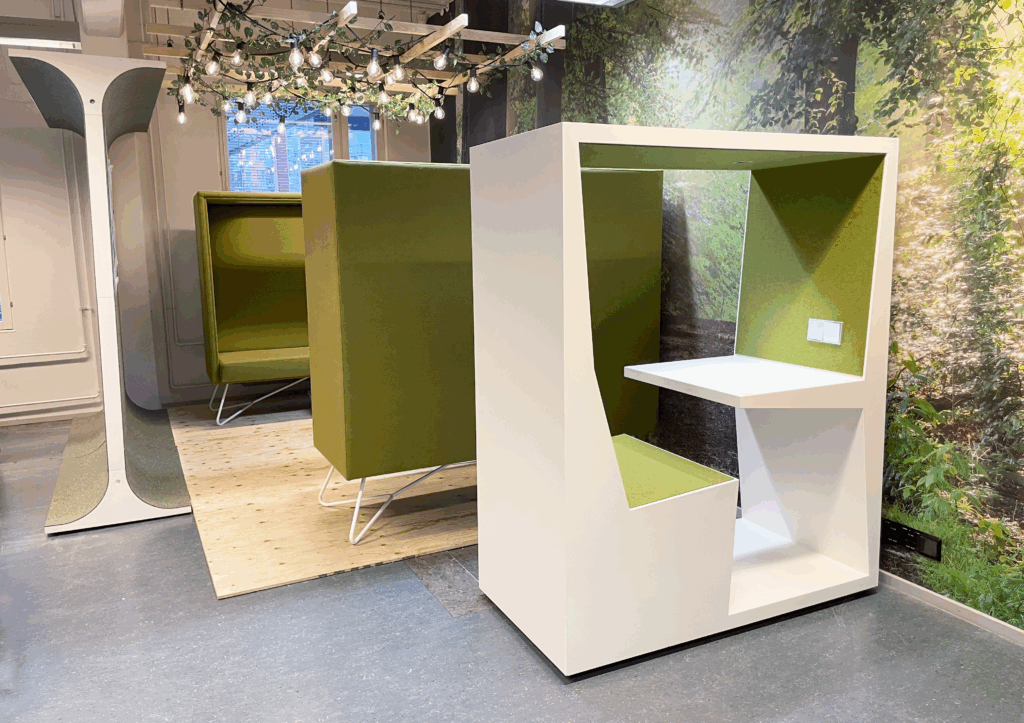
Creating a quiet working space in an open office requires soundproofed rooms combining acoustic and acoustic solutions. The most effective methods include the use of room dividers, PODs and office cubicles, which reduce noise and improve concentration. Furnishing the office with the right acoustic elements creates a calm working environment that supports both collaboration and tasks that require deep concentration.
Why are open offices often noisy and how does it affect work?
Open offices are noisy because they combine calls, conversations, keyboard sounds and movement in the same space without acoustic barriers. Noise is a major distraction, reducing productivity and increasing stress among workers.
The main sources of noise in an open office are conversations between people, telephone calls, the sound of equipment and general movement in the space. When sound can travel unimpeded, it disturbs everyone working nearby. Hearing conversations is particularly distracting because our brains automatically pay attention to the language being spoken.
The psychological effects are significant. Constant noise increases stress levels, impairs memory and slows down decision-making. Workers tire more quickly and feel dissatisfied with their working environment. If prolonged, noise pollution can lead to job fatigue and increased sickness absence.
What acoustic solutions can be used to reduce noise in an open office?
Acoustic solutions include sound absorbing materials, such as acoustic ceiling tiles and wall panels, which absorb sound effectively. Partitions and partition walls provide both visual and acoustic protection, creating quieter working areas in the open office.
Roof acoustics is one of the most important elements. Acoustic ceiling tiles and suspended elements reduce sound reflection and echo in the space. These solutions are particularly effective because most sound travels through the ceiling to adjacent workstations.
Wall panels and acoustic elements on the walls help to control sound propagation. They can be both functional and aesthetically pleasing, combining interior design and acoustic improvement. Panels work particularly well near meeting rooms and areas where concentration is required.
The acoustic properties of room dividers vary depending on the material and construction. Soft, porous materials absorb sound better than hard surfaces. Height and density have a significant influence on how well a partition blocks sound from reaching adjacent workstations.
How do partitions and partition walls help create quiet working areas?
Space dividers create soundproofed rooms by dividing the open space into smaller parts and preventing the direct passage of sound. Properly positioned partitions reduce both visual and acoustic distractions, significantly improving working peace.
The types of partitions range from fixed wall solutions to movable elements. High partitions provide better acoustic protection, while lower ones maintain a sense of openness. The choice of material affects both sound insulation and aesthetics.
Positioning is crucial for efficiency. Space dividers should be positioned to create natural working areas and guide movement through the space. Strategically placed dividers can direct sound away from the most sensitive work areas.
Height plays a significant role in acoustic performance. Partitions at least 160 cm high provide good protection for people working in a seated position. Ceiling-to-floor solutions provide the best possible acoustic insulation.
Which special solutions are suitable for jobs that require concentration?
POD rooms and enclosed workspaces such as office cubicles provide maximum acoustic protection for tasks that require concentration. These solutions create a well-insulated environment where employees can work undisturbed and hold confidential calls.
PODs are modern, often glass-walled workspaces that can be located in an open office. They provide a visual link to the surrounding space while maintaining acoustic insulation. POD rooms are ideal for video conferencing, concentration-demanding work and private calls.
The benefits of office cubicles are manifold. They reduce interruptions, improve privacy and create a calm environment for deep thinking. They can be fixed or mobile, depending on space needs and flexibility requirements.
Placement principles in an open office require careful planning. Enclosed workspaces should be positioned so as not to obstruct natural light or interfere with the general flow of space. The best locations are often at the edges or corners of the space, where they provide maximum benefit without disturbing other activities.
Creating a quiet working space in an open office requires a holistic approach that combines acoustic materials, smart partitions and special solutions. Properly implemented, these solutions can significantly improve well-being and productivity, creating an environment that supports both collaboration and focused work.