







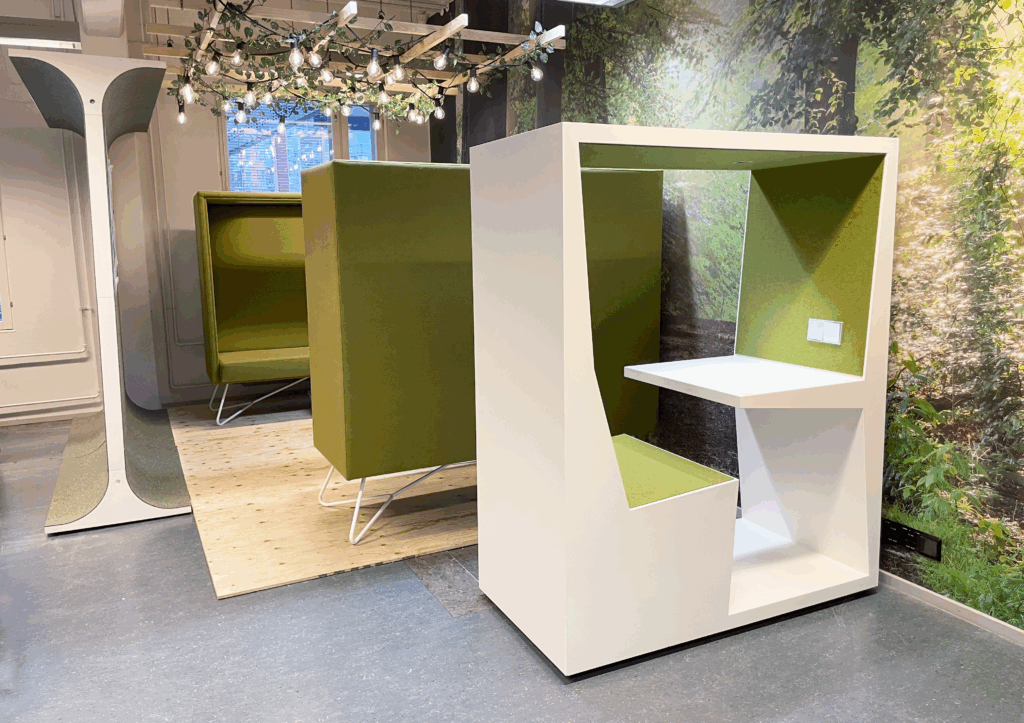
The traditional office and multi-storey office is based on the design of the space and the organisation of work. A traditional office consists of closed rooms and clear hierarchies, while a multi-space office combines open spaces and flexible working areas. Both models have a significant impact on employee well-being, productivity and company costs.
What is a traditional office and how does it work?
The traditional office is based on closed rooms and a clear hierarchical organisation of space. Managers have their own corner offices, middle managers have private rooms and junior staff work in smaller rooms or open plan offices.
Key features of this model include separate offices, enclosed meeting rooms and clear boundaries between departments. The hierarchy of the organisation is directly reflected in the size and location of the rooms - the higher the position, the larger and better located the room.
In a traditional office, employees can concentrate on their tasks undisturbed in their own space. Privacy is a strength, but it can also slow down communication and collaboration between departments. The use of space is efficient for individual tasks, but flexibility is limited.
What is a multi-tenant office and why is it becoming more common?
Multi-storey office combine open workspaces, collaborative areas and specialised spaces for different types of work. It includes meeting rooms, quiet spaces for tasks that require concentration, social areas and flexible workstations.
The proliferation of multi-tenant offices is due to a number of factors. Cost-effectiveness is a major reason, as open plan offices require less building square footage per person. Collaboration has become increasingly important in many professions, making open plan spaces attractive.
Digitalisation has changed the way we work. Workers move between different spaces according to their tasks - work that requires concentration is done in quiet spaces, while collaborative projects are carried out in open areas. This flexibility meets the needs of modern working life better than fixed workplaces.
What are the main differences between a traditional and a multi-space office?
Privacy is the main difference between these office models. A traditional office offers full privacy in a private room, while in a multi-office, privacy varies according to the space and must be sought in specific areas.
Noise levels differ significantly. Enclosed rooms provide a quiet working environment, while open spaces can be noisier. Multi-room offices often need room dividers and pod rooms to create quiet working areas.
Collaboration opportunities are better in a multi-storey office. Spontaneous interaction and information sharing are more natural when employees see each other on a daily basis. In a traditional office, collaboration requires more planning and scheduled meetings.
The cost differences are considerable. A multi-tenant office is typically 20-30 % cheaper per square metre, because space is used more efficiently. Space utilisation is higher when workstations are shared and space is used in a variety of ways.
Which office model is better suited to different businesses?
The size of the company and the sector in which it operates have a significant impact on the choice of the right office model. Small businesses often benefit from the flexibility and cost-effectiveness of a multi-office, while larger organisations may need more traditional structures for administrative reasons.
The nature of the job is a crucial factor. Tasks that require concentration, such as writing or analysis, benefit from quiet spaces. Creative, collaborative jobs such as marketing or product development are more likely to thrive in open environments.
Staff preferences and age distribution influence the choice. Younger generations often prefer flexible spaces, while more experienced employees value privacy. Ideally, an office will offer both.
Ultimately, the budget determines the possibilities. A multi-space office is a cheaper option, but it requires investment in the right furniture and partitions to work effectively. A traditional office costs more, but its functionality is more predictable.
A successful office design takes into account the specific needs of the business and combines the best of both worlds. The key is to create an environment that supports both concentration and collaboration according to the work tasks.