







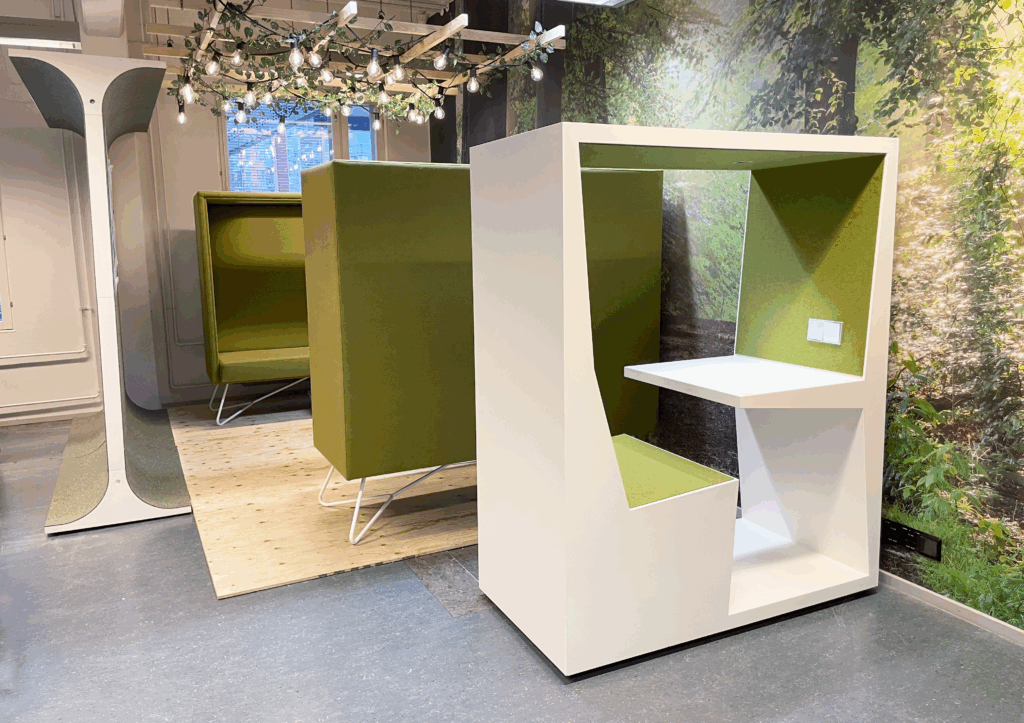
A phone booth in the office is optimally located so that it is easily accessible but does not interfere with general work. The best location is usually in the centre of the office, close to access routes but sufficiently distant from workstations. The choice of location has a significant impact on the occupancy rate and the functionality of the telephone booth within the work community.
What are the best places to put a phone box in the office?
The best location for a telephone booth is in the middle of the office along access routes, but not directly on the main corridor. This ensures good accessibility without disturbing normal traffic or working peace.
Telephone booths along the corridors are a natural choice, as they integrate seamlessly into the office architecture. The location should be chosen so that the booth has a view of the surrounding space, but is not directly in front of the workstations. The open view allows employees to see that the cubicle is free and to reserve it if necessary.
Typically bad locations are cubicles at the back of the office, which are easily left unused. Similarly, booths located too close to conference rooms or quiet work zones can disrupt other activities during calls. The optimum distance from the nearest workstations is at least 3-4 metres.
What factors should be taken into account when locating a phone booth?
Placement of the phone box technical infrastructure is the primary factor to consider. The enclosure needs an electrical connection for lighting and any equipment, and adequate ventilation for comfort.
Lighting is a critical factor, as the booth must have enough light for natural working. Artificial lighting should be uniform and easy on the eyes, especially if digital equipment is used in the booth. Ventilation is equally important - an enclosed space needs good air circulation to keep the user comfortable for longer calls.
Ergonomic considerations cover the design of the internal space of the booth. Seat height adjustability, adequate legroom and correct desk height all contribute to comfort. Privacy and privacy must be balanced so that the cubicle provides adequate insulation from outside sounds but does not feel claustrophobic.
How does the location of the phone box affect its occupancy rate?
Location matters direct impact on occupancy - booths that are easily visible and accessible are used 60-80 % more often than those in remote locations. Psychologically, workers prefer spaces that feel like natural parts of the work environment.
Users are more willing to book a phone booth when it is located in a visible place and is part of a normal access route. Employees are more likely to integrate the use of a payphone into their daily routines when it does not require special planning or long walks.
Social acceptability also affects use. If the cubicle is located in a place where its use feels natural and accepted, workers will be more likely to use it. A cubicle in a place that is too isolated can feel like a “hiding place”, which discourages use.
How to avoid the most common mistakes when placing a phone box?
The most common error is place the cubicle too far away on the edge or in a corner of the office, where it is easily forgotten. Another major problem is the inadequate infrastructure that must be taken into account when deciding where to locate the equipment.
Neglecting lighting is a common mistake - placing the stall in a place where there is not enough light or the lighting is uneven. This makes the booth uncomfortable to use and reduces its usefulness. Lack of ventilation is another technical problem that makes the booth uncomfortable during extended periods of use.
A cubicle too close to the workstations will disturb other workers, while one too far away will go unused. The optimum solution is a balance: a cubicle that is easily accessible but does not interfere with normal work. During the design phase, it is worth testing different location options and asking employees for their opinions before making a final decision.