








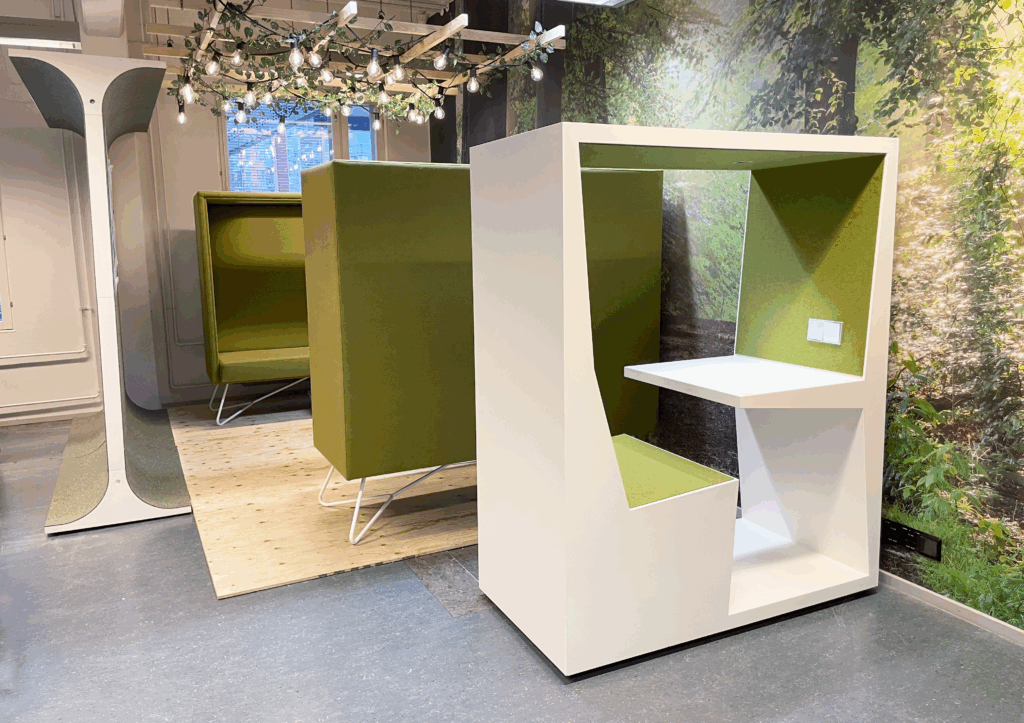
A quiet space in the office means an acoustically isolated area, designed to reduce distractions and allow you to concentrate on your work. In a multi-room office, a quiet space provides a peaceful escape from the noisy environment of an open office and significantly improves employee productivity and well-being.
What is a quiet space and why is it essential in a modern office?
The Quiet Space is specially designed the sound attenuation zone, which allows workers to focus on demanding tasks without distractions. This space is essential in a multi-room office because open work environments often create too much noise and visual distraction.
The importance of a quiet space is particularly important in modern open offices, where workers need to be able to vary their work situations. When a task requires deep thinking or precision, a quiet space provides an optimal environment for improving the quality of work.
Acoustic design is the foundation of a quiet space. The space uses materials and structures designed for sound absorption to prevent outside sounds from entering the space. At the same time, internal sounds, such as the tapping of a keyboard or the rustling of paper, are kept under control.
The role of silent space in a multi-space office
In a multi-user office, a quiet space complements other workspaces and creates a balanced working environment. It allows employees to move between different spaces according to the nature of their work, improving both work efficiency and well-being.
How does a quiet space differ acoustically from a normal office space?
A quiet space is different from a normal office space at a significantly lower sound level and a controlled acoustic environment. While in a typical open-plan office the sound level can reach 55-65 decibels, in a quiet room the aim is less than 45 decibels.
Methods of sound attenuation in quiet spaces are based on a number of technical solutions. Wall constructions make use of absorbent materials that absorb sound instead of reflecting it back into the room. Floors and ceilings are designed to minimise the transmission of footsteps and other sounds.
The choice of materials is crucial to the performance of a quiet space. Soft surfaces, such as textiles and special foams, reduce echo and sound reflection. Hard surfaces, such as glass and metal, are used sparingly or are treated with sound absorbing materials.
Technical solutions for sound management
In a quiet room, technology can also be used to improve sound management. White noise or natural sounds can mask distracting background noise. Ventilation design minimises the noise from machinery.
What are the main benefits of quiet space for workers?
The main benefits of silence are related to improved concentration and lower stress levels. Workers are able to perform demanding tasks more effectively when external distractions are minimised. This leads to higher quality of work and better well-being at work.
The psychological benefits of the quiet state are significant. Workers experience less stress when they have the opportunity to retreat to a quiet environment when needed. This improves work motivation and reduces the risk of work fatigue.
Physiological benefits include lower blood pressure and a steady heartbeat. Constant exposure to noise causes stress reactions in the body, which the quiet state helps to reduce. This improves the overall health of workers.
Improved productivity is the clearest measurable benefit of quiet space. Workers perform concentration-intensive tasks faster and more accurately when the environment supports deep work. This is reflected in both the quality and quantity of work.
Impact on teamwork
The quiet space also supports teamwork by providing a place where employees can prepare for meetings or tackle demanding projects before working together. This improves the performance of the whole team.
How to design and implement a quiet space in the office?
The design of the Quiet Space begins site selection and definition of acoustic requirements. The space should be located away from the busiest thoroughfares and noisiest areas. The design of the space should take into account both privacy and easy access for employees.
The choice of furniture has a significant impact on the functionality of the space. Soft, sound-absorbing materials are preferred. Desks and chairs are chosen for ergonomics and quietness, avoiding hard surfaces and noisy furniture.
The use of acoustic materials is at the heart of the implementation of a quiet space. Sound absorbing panels are installed in the walls to absorb sound effectively. Ceiling and floor solutions are designed to minimise the transfer of sound in and out of the space.
The lighting design supports peaceful working. Slightly dimmed, even light reduces eye strain and creates a relaxed atmosphere. Natural light can be used, but it should not cause glare or heat problems.
Cost-effective solutions
A quiet space can also be implemented on a smaller budget by using modular solutions. PODs and movable partitions allow for flexible space creation without major structural changes. These solutions are particularly suitable for rental spaces and changing offices.
Successful implementation depends on careful planning and the right choice of materials. Consulting professionals will ensure that the space meets the acoustic requirements and effectively serves the needs of employees in the long term.