








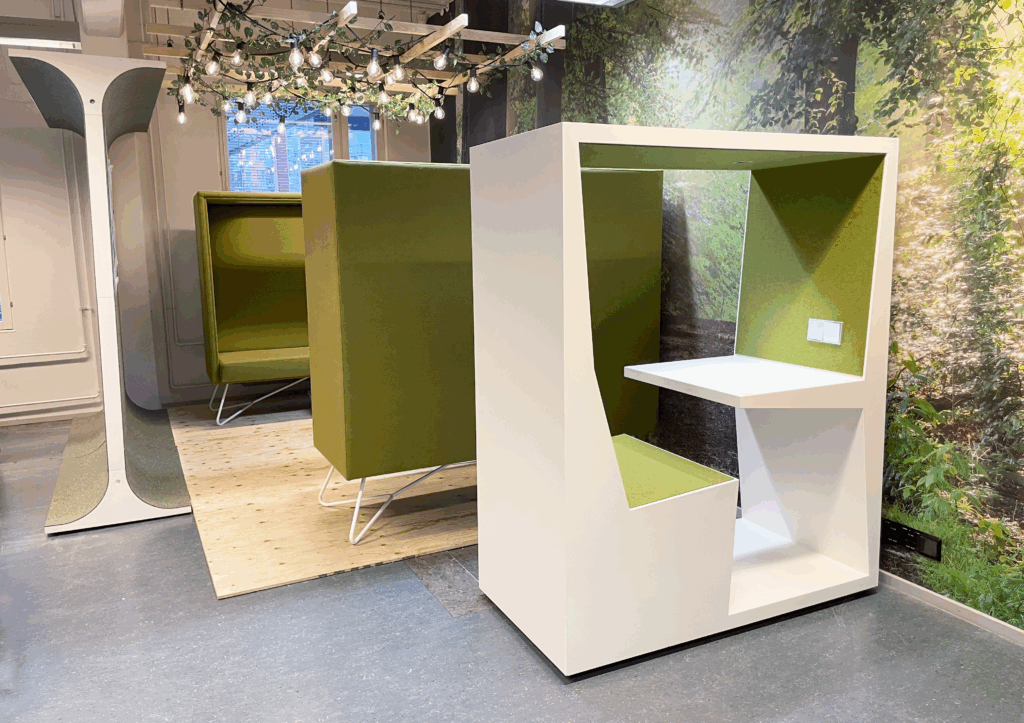
A multi-space office improves employee well-being by providing different spaces for different work tasks, which reduces stress and increases job satisfaction. It combines quiet space for tasks requiring deep concentration, collaboration areas for teamwork and ergonomic solutions to support physical well-being. This multi-faceted approach supports both the individual needs of employees and the productivity of the organisation.
What does a multi-tenant office mean in practice?
Multi-storey office is a working environment that offers a variety of spaces for different tasks, rather than a traditional open office. It includes quiet areas for concentrated work, collaborative spaces for group work, informal meeting places and private spaces for phone calls.
In a traditional open office, all employees work in a similar environment, regardless of the nature of their tasks. In contrast, a multi-room office recognises that different work tasks require different environments to achieve optimal performance.
A typical multi-storey office contains several different zones. A quiet space is reserved for deep thinking work, such as analysis or report writing. Collaboration areas support teamwork and brainstorming. Social spaces allow for informal meetings and networking. POD rooms provide privacy for phone calls and video conferencing.
How does a multifunctional office affect the concentration of workers?
A multifunctional office significantly improves concentration by providing quiet space for tasks requiring deep concentration. When workers can choose a calm environment for analytical work, their productivity and quality of work are greatly improved.
Minimising distractions is key to improving concentration. In an open office, constant interruptions, phone conversations and moving around are distractions. In a multi-room office, these activities are segregated into their own spaces, protecting quiet areas from distractions.
Partitions and PODs create visual and acoustic screening. They help workers enter a deep state of concentration where complex tasks can be performed more efficiently. When employees know they can work in peace, stress is reduced and motivation increases.
Why is collaboration better in a multi-site office?
Collaboration is enhanced in a multi-space office, as different collaboration spaces are designed to support different forms of teamwork. Open collaboration areas encourage spontaneous interaction, while closed meeting spaces allow for focused teamwork.
Spontaneous collaboration happens in social areas and corridors, where workers meet naturally. These informal encounters often lead to innovative ideas and solutions. At the same time, planned collaboration is given a space in which teams can work undisturbed.
A variety of seating and workstations allow teams to choose the form of collaboration that best suits their task. Standing still activates brain activity during the brainstorming phase, while comfortable seating supports longer design sessions. This flexibility makes collaboration more effective and meaningful.
What are the ergonomic benefits of a multifunctional office?
The multi-storey office offers significant ergonomic benefits by allowing for changing workstations and a variety of working positions throughout the day. Workers can alternate between sitting, standing and moving around, reducing musculoskeletal problems.
Different types of seating support healthy working postures in different situations. Ergonomic task chairs provide support for long periods of concentrated work, while informal seating encourages posture changes and relaxation. This versatility prevents problems caused by static strain.
The variation of work stations activates the blood circulation and muscles. When a worker moves from a quiet space to a collaborative area and from there to a standing workstation, the body stays active throughout the day. This reduces the health risks of sitting and improves overall well-being.
How does a multifunctional office support different ways of working?
A multi-space office meets the needs of a diverse workforce by offering options for introverts and extroverts and for different types of work. Everyone can find an environment that suits them, supports their natural way of working and maximises performance.
Introverts benefit from quiet spaces and POD rooms where they can work in peace without social pressure. Extroverts, on the other hand, thrive in more open collaborative spaces where they are energised by interacting with others. Both personality types will find a multifunctional office the optimal environment.
Creative work requires an inspiring and flexible environment, which is provided by collaborative spaces and informal spaces. Analytical work benefits from quiet spaces that support concentration. Client work needs private spaces for confidential discussions. A multi-space office allows all these types of work to be carried out effectively in the same environment.
The wellbeing benefits of a multi-space office come from recognising the different needs of employees and providing solutions to meet them. Allowing employees to choose their working environment according to their tasks and mood improves both job satisfaction and productivity. This holistic approach makes the workplace not only more efficient, but also more comfortable and healthier.