







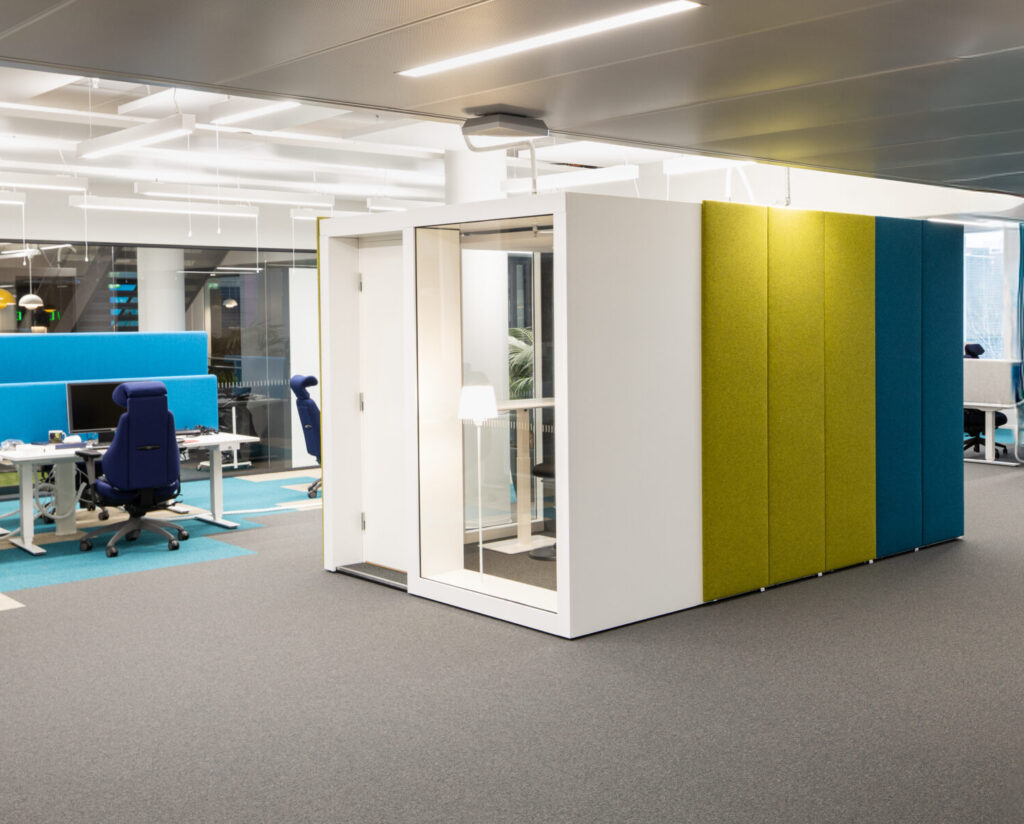
A room divider is a piece of furniture or structure that divides a space into smaller parts, while improving acoustics and privacy. It acts as both a physical and visual element that shapes the experience of using a space by creating functional areas without solid walls. In modern interior design, partitions have become a key solution for combining openness and flexibility with peace of mind and concentration.
What is a space divider and what is it for?
A room divider is a decorative element that separates spaces without fixed structures. It creates a visual and physical boundary between different functions while maintaining the openness and adaptability of the space. Partitioning is particularly used in open plan offices, educational establishments and public spaces where flexibility and the ability to change space according to need are required.
The main task of the space divider is to improve the functionality of the space. In open-plan working environments, it allows different working areas to be created in the same space: tasks that require concentration can have their own quiet corner, while collaborative spaces can remain open and easily accessible. This is particularly important in the modern workplace, where the same space serves many different needs throughout the day.
Space dividers also act as visual elements that add rhythm to the space and create architectural interest. They can be tall floor-to-ceiling structures or lower elements that delineate the space in a more subtle way. The choice of materials and design will influence how the divider blends in or stands out as an element in its own right.
How can a room divider improve acoustics and privacy?
A room divider reduces noise by absorbing sound energy and preventing sound waves from being reflected freely in the room. Acoustic partitions are coated with materials that absorb sound rather than reflecting it back into the room. This reduces echo and improves speech clarity, especially in open workspaces where hard surfaces would otherwise cause distracting reverberation.
Privacy enhancement takes place at two levels. Visual privacy is created when a partition blocks direct line of sight between different areas. This is psychologically significant, as the mere knowledge that you are not constantly under the gaze of others improves concentration and reduces stress. Acoustic privacy, on the other hand, means that conversations are less easily heard on the other side of the room, allowing for more confidential conversations and reducing distractions.
The operational benefits are visible in many ways in everyday life. Workers can concentrate better on demanding tasks with less background noise and fewer visual distractions. In learning environments, children and students benefit from a clearer soundscape that supports concentration and interaction. In public spaces, partitions create more pleasant seating areas where people can work or rest in peace.
What is the difference between the different space-saving materials?
Fabric-clad acoustic panels are the most common choice for working environments and educational institutions. They provide excellent sound absorption, as the felt or other textile surface effectively absorbs sound energy. Fabric surfaces also allow for versatile use: they can be used to attach papers, posters or other materials, making them functional work tools. The material is soft and safe, making it ideal for day-care centres and other areas where safety is a priority.
Glass surfaces bring lightness and transparency to the space while maintaining visual separation. Glass reflects sound, so it doesn't offer the same acoustic benefits as textiles, but it works well in spaces where you want to maintain an open feel and light look. Glass is particularly suitable for prestigious spaces and meeting rooms where aesthetics are important. Low-patterned or frosted glass increases privacy without blocking the passage of light.
Wood surfaces bring warmth and a natural atmosphere to the interior. Wood is an acoustically neutral material that reflects sound more than textiles but less than glass or stone. Wooden partitions are particularly suitable for rooms where Scandinavian design and durability are to be emphasised. Wooden surfaces are durable and easy to maintain, which makes them ideal for busy public spaces.
The choice of material also affects the mobility and installation of the divider. Lightweight fabric-coated panels are easily movable and can be fitted with wheels, making them flexible solutions for changing needs. Heavier glass and wood constructions offer a more stable structure but require more planning in terms of placement.
How to choose the right space divider for your space?
The size of the space largely determines the dimensions and layout of the divider. In a small space, a shallow divider may be sufficient to create visual separation while maintaining a sense of openness. In larger spaces, higher structures work better, providing more effective acoustic separation and a clearer visual demarcation between different areas. The height of a space also affects how massive a room divider can be without feeling oppressive.
Purpose is the main selection criterion. If the aim is to improve acoustics and reduce noise, fabric-coated acoustic panels are the most effective solution. If you want to maintain a visual link between different areas but still create some kind of boundary, glass surfaces or low-profile structures may be a better choice. In learning environments and nurseries, multi-functionality is important: a room divider can double as a presentation surface or a creative workspace.
Acoustic needs vary depending on the use of the space. In an open office with a lot of telephone conversations and meetings, effective soundproofing is essential. In public spaces such as libraries or cafés, acoustics have a direct impact on comfort. In nurseries and schools, a clear sound environment supports learning and reduces stress for both children and adults.
Aesthetic compatibility ensures that the divider fits in with the overall look of the space. The colour, shape and material should be chosen to support the existing interior or create the desired contrast. In Scandinavian design, simple lines and natural materials work well, while in more modern spaces you can experiment with bolder colours and shapes.
Mobility significantly increases the utility value of the divider. If a space needs flexibility and the ability to change configuration as needed, lightweight structures with wheels are the best choice. More fixed solutions are suitable for spaces where the layout remains stable over a longer period of time. Your budget will obviously influence your choices, but it's worth remembering that a quality space divider is a long-term investment that will improve the functionality and comfort of your space for years to come.
Space dividers have changed the way we design and use spaces. They offer a solution to the challenges of modern working and learning environments, combining flexibility, functionality and aesthetics. When choosing a room divider, first consider the real needs of the space: whether you primarily need acoustic enhancement, visual separation or both. Chosen correctly, a partition will make a significant difference to the experience of using a space, creating more comfortable and efficient environments for working, learning and lounging.