








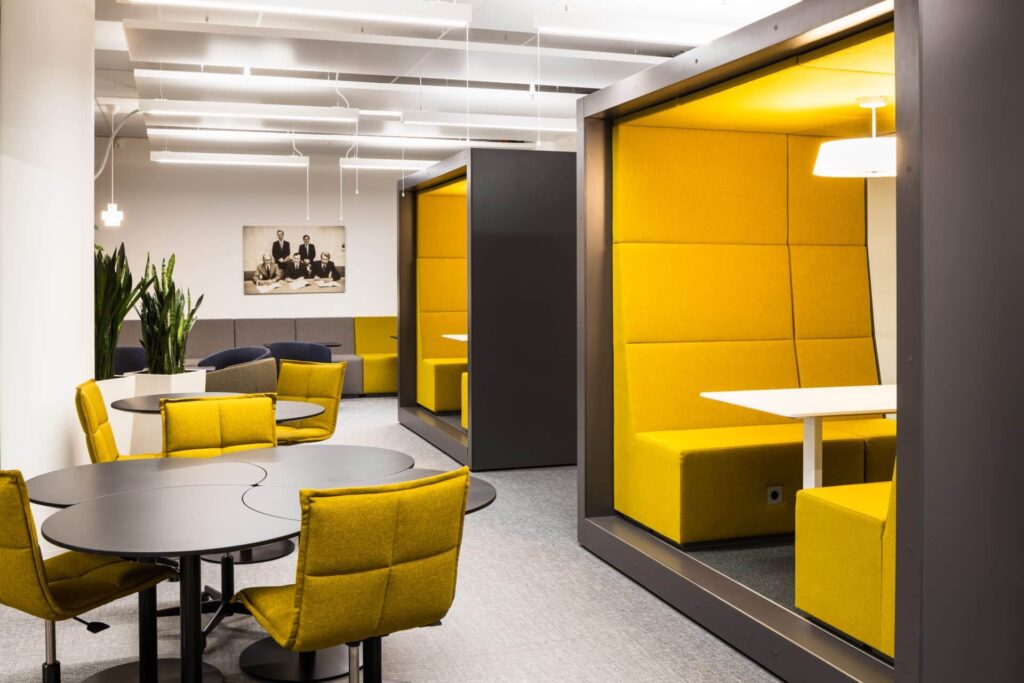
The choice of furniture in an office space has a significant impact on the ability of employees to concentrate on their work. Correctly selected and positioned furniture supports ergonomic working, reduces distractions and promotes well-being. Ergonomic chairs and desks prevent physical discomfort, while acoustic solutions reduce noise. Spatial design can create areas that support both collaboration and individual work. Careful furniture selection is an investment in employee productivity and well-being.
How does office furniture affect concentration?
Office furniture is much more than just a physical platform for getting work done - it is an essential part of the working experience and directly affects how well employees can focus on their tasks during the day. Cognitive performance is influenced by many factors related to furniture, from physical comfort to a sense of psychological safety.
In modern working environments, furniture that supports concentration takes into account ergonomic principles, acoustic properties and the overall importance of spatial design. It is essential to offer workers options for different work tasks - sometimes a quiet, private space for deep work, sometimes a collaborative solution.
Multi-room offices have become a popular solution, offering at best a balance between old-fashioned enclosed offices and too much open space. In such an environment, the importance of furniture is even greater, as it defines the uses and characteristics of the different spaces.
Which ergonomic features support better concentration?
Ergonomic furniture plays a key role in maintaining concentration. When the body feels good, the mind can focus more effectively on the task at hand. Adjustable desks allow you to work both sitting and standing, improving circulation and preventing stiffness caused by static working positions. The variable working posture keeps the mind alert and improves concentration in the long term.
Ergonomic chairs are all about adjustability and a design that supports the natural position of the back. A good chair allows you to sit up straight without muscle aches, even during long working days. Display stands, on the other hand, help to ergonomically position the monitor at the right height at eye level, preventing neck pain and eye fatigue.
Solutions that support hands and wrists, such as wrist rests and ergonomic mice, reduce strain and prevent painful conditions. In the absence of physical pain, workers can concentrate better on their tasks instead of being distracted by discomfort or aches and pains. Holistic ergonomics lays the foundation for better concentration and work performance.
How do acoustic solutions affect concentration in an open office?
In open workspaces, sound travels freely, making acoustic solutions a key factor for concentration. Soundproof baffles, acoustic panels and podiums create quiet islands where thinking can take place without constant interruptions. Office cubicles offer a solution for particularly distracting work tasks such as remote meetings.
Acoustic furniture such as INTO the Nordic Silence products are specifically designed to reduce distractions in open working environments. For example FOCUS acoustic table provides both visual and audible protection for tasks requiring concentration. For teamwork, the following are suitable POD rooms, which allow group discussions without disturbing other people working in the open office.
By paying attention to acoustics, employees are better able to maintain a so-called flow state, where work is at its most effective. Acoustic solutions for open offices are not just a comfort factor, but a necessity that directly affects the quality and efficiency of work.
What kind of workstation furniture minimises distractions?
The key to designing workstations is to create an environment where both visual and physical distractions are minimised. Privacy screens prevent visual distractions caused by passers-by that can break concentration at a critical moment. As INTO experts have found, even small movements in the field of vision can interrupt a good working mood.
Wire management systems keep the workplace tidy and organised. Hanging and tangled wires create both visual clutter and practical inconveniences that distract from the task at hand. Modern workstations include stylish and functional storage solutions that keep the tools you need within reach but organised.
How does the layout of office furniture affect team focus and collaboration?
The arrangement of furniture can create a working environment that supports both individual concentration and smooth teamwork. In a multi-purpose office, the different work areas - focus areas, collaboration spaces and break-out areas - are designed and furnished to serve their intended purpose. A clear structure of spaces helps employees to choose the most appropriate environment for the task at hand.
In the focal areas, furniture is positioned to minimise eye contact and passing traffic. Privacy-enhancing solutions such as high-backed chairs or serrated workstations allow you to immerse yourself in your work.
In collaborative spaces, the flexibility of furniture is emphasised. Different sofa modules, which can be combined to create meeting spaces as required, support teamwork. Ergonomics is not forgotten in these spaces - for example, seat height and backrest angle are also important for more informal meetings.
The placement of furniture can also be used to guide movement around the space and create natural meeting places that encourage spontaneous exchange of information between workers without distracting from the work that requires concentration.
The role of office furniture in promoting well-being and concentration at work
Office furniture plays a key role in building working environments where employees can both feel well and work efficiently. Furniture is not just a cost item, but a strategic investment in the productivity and well-being of staff. A well-designed working environment reduces stress, prevents work-related ailments and allows concentration.
The key to updating the office environment is to start with the needs of the staff. Different jobs require different furniture and different spaces. The multi-space office model gives employees the freedom to choose the most appropriate workstation for the task at hand, increasing their sense of control and improving their ability to concentrate.
The key factors in creating a functional office environment are:
- Providing ergonomic workstations for all workers
- Using acoustic solutions to manage the sound environment
- Optimising space planning to support different work tasks
- Creating storage solutions and systems to maintain order
- Choice of flexible furniture that adapts to changing needs
INTO Concept offers expertise and quality solutions to meet these needs. Nordic design is combined with functionality, for example in acoustic furniture, workstations and meeting space solutions. Our products are designed to promote well-being at work and improve concentration in challenging working environments.
Take a look at a our references and be inspired by the projects that have been implemented - contact us, and together we will find the solution that suits you best!