








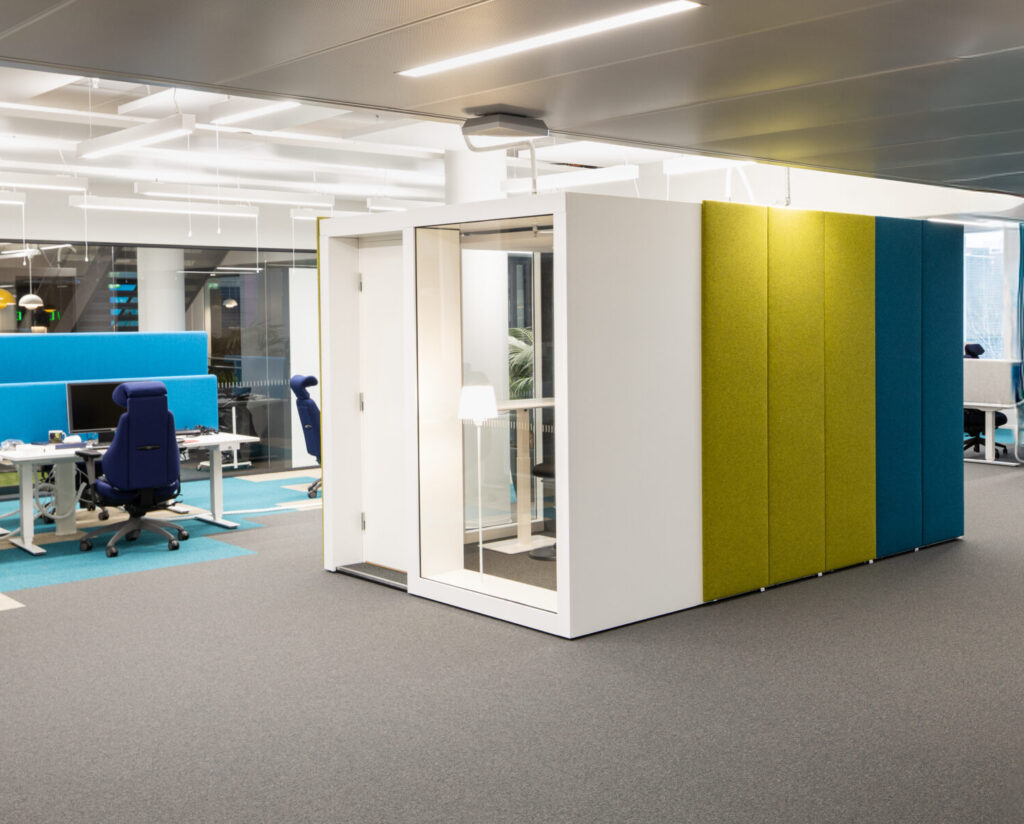
Choosing the right phone booth for your office depends on a number of factors, including the quality of soundproofing, the space you need and the purpose of the room. A good telephone booth provides privacy for calls and video conferencing, reduces distractions in an open office and improves well-being at work. In this article, we go through the key considerations that will help you make the right choice.
Why is a phone booth necessary in the modern office?
Open offices create acoustic challenges and a lack of privacy that directly affect the quality of work and well-being. Phone booths solve these problems by providing a quiet space where calls and video conferences can be handled without disturbing others. They enable concentration-intensive tasks to be carried out and improve the overall functionality of the working environment.
Multi-user offices need spaces where telephone conversations can be conducted in peace without disturbing others. Using a meeting room for eight people as a personal phone booth is not an efficient use of space. A telephone booth offers a flexible solution that can be installed without modifying existing structures and moved to another location if necessary.
Privacy is particularly important in confidential customer calls and personal conversations. A phone booth allows these situations to be handled professionally without other employees hearing the content of the conversation. This improves the experience for both employees and customers.
What features should a good phone box have?
A good phone box key features are effective sound insulation, efficient ventilation, adequate lighting and ergonomic design. The cubicle should also have the necessary technical connections, such as sockets and access to equipment. The quality of materials and the durability of the structure should support long-term use.
Ventilation is a critical factor that directly affects the comfort of use. Poor ventilation makes the booth stale and uncomfortable to use for longer periods of time. A well-functioning ventilation and ventilation system will ensure that there is fresh air in the room even during longer calls and video conferences.
The lighting should be sufficient and comfortable to make the booth suitable for video conferencing. Ergonomics have an impact on how comfortable it is to work in the booth. Adequate knee room, an adjustable seat and a suitable working surface height make even long calls comfortable.
How do you assess the soundproofing and acoustics of the phone booth?
The key indicator for assessing sound insulation is speech value STI (Speech Transmission Index), which indicates how well speech can be heard outside the booth. In a good telephone booth, the STI value for normal speech is between 0.10 and 0.15, which means that speech transmission is unclear and it is difficult to understand individual words outside the booth.
Sound insulation depends on the materials used and the tightness of the structure. High-quality sound-absorbing materials reduce echo inside the booth and prevent sound from spreading outside. This ensures the necessary privacy and ensures that the phone booth fulfils its purpose.
Practical testing is the best way to assess sound insulation. Ask to test the booth with normal speech inside and listen to how it sounds outside. If individual words stand out clearly, the soundproofing is not adequate. In good quality booths, speech is only heard outside as a vague hum.
How much space does a phone box take up in the office?
A single phone booth typically requires about 1-1.5 square metres of floor space. A two-person booth takes up about 2-3 square meters, and larger meeting rooms take up more. The space requirement should also include the required free space around the booth for circulation and ventilation.
The placement should take into account the office traffic flows and noise areas. Telephone booths should not be placed right next to doors or on main thoroughfares where constant traffic disturbs users. On the other hand, they should be easily accessible so that they are actively used.
Compact solutions are suitable for quick calls, while larger booths work for spontaneous meetings and independent work. Think about the purpose of the booth and the users beforehand to ensure you choose the right size solution. Many booths can be installed without modifying the structure and moved as required, adding flexibility.
What are the most common mistakes when choosing a phone booth?
The most common mistake is putting price before quality. A cheap phone booth with poor soundproofing is easily left unused because it doesn't serve its purpose. This makes the investment worthless, no matter how cheap it was. Quality soundproofing is the most important feature of a phone booth.
Neglecting ventilation is another common problem. A stall without proper ventilation quickly becomes stuffy and uncomfortable to use. This limits the time of use and reduces the usefulness of the booth, especially for longer video conferences.
Choosing the wrong size causes frustration. Too small a cubicle feels cramped and uncomfortable, while too large takes up unnecessary office space. Think realistically about how many people will use the cubicle at any one time and for what purpose. Also consider the comfort of use for longer sessions, as ergonomics will affect how well the cubicle serves its users in their daily work.
Choosing the right phone booth will significantly improve office functionality and well-being. Focus on the quality of soundproofing, ventilation and comfort of use and you'll find a solution that will serve your needs for a long time. A quality telephone booth is an investment that pays for itself in a better working environment and more efficient use of space.