








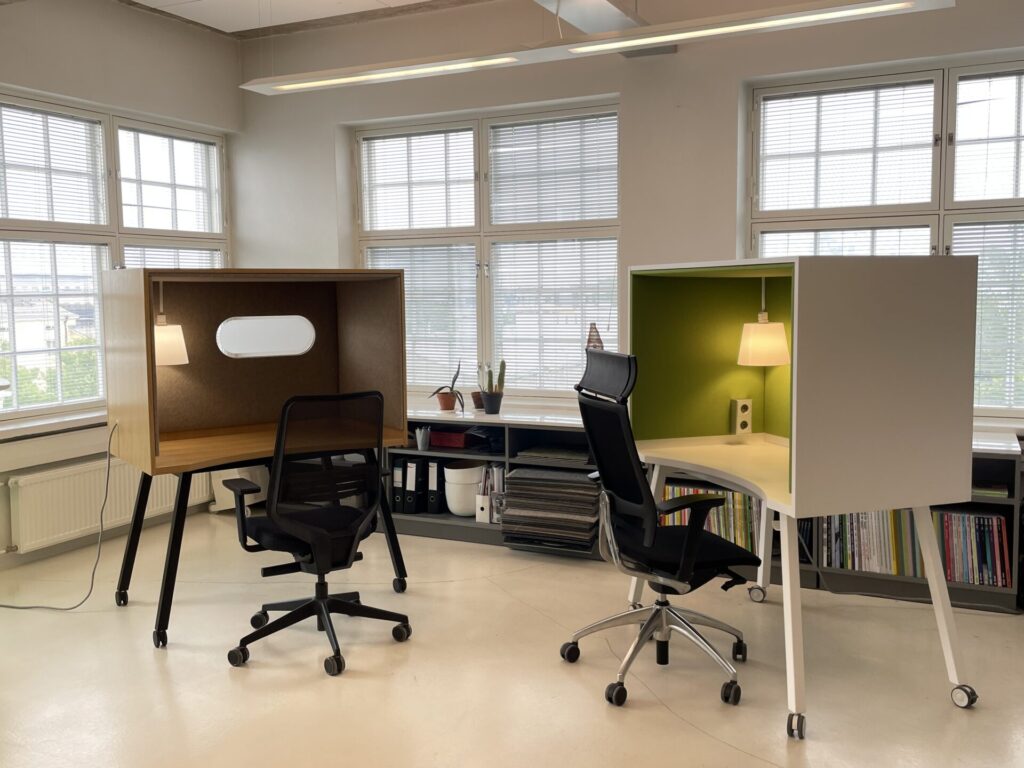
The modern office environment requires adaptability to meet the changing needs of employees. Creating a functional, flexible office requires careful planning that takes into account the multi-purpose use of spaces, acoustic solutions, ergonomics and cost-effectiveness. A successful implementation includes adjustable workstations, soundproofed spaces for work that requires concentration, and collaboration areas that support different ways of working. In addition, the design must take into account future work trends such as the growth of hybrid and remote working.
What are the most important elements of a flexible office environment?
The cornerstones of a flexible office environment are adaptable workstations that can be adjusted to suit different tasks. The importance of multi-purpose areas is emphasised in modern work culture, where the same spaces are used for both tasks that require concentration and group work.
Adjustable workstations enable individual working in different positions. Adjustable desks offer the possibility to vary between sitting and standing, which promotes well-being and productivity.
Movable room dividers are a key part of a flexible office environment, as they enable the rapid rearrangement of spaces as needed. They function as both visual and acoustic elements, creating privacy even in open spaces.
Soundproofed rooms are ideal for work that requires concentration. They provide a quiet workspace for phone calls, video conferences or tasks that require intense focus. These spaces are essential in modern multi-space offices.
How does acoustics affect a flexible office environment?
Acoustics play a significant role in the functionality of office environments, especially in open-plan spaces. A good sound environment reduces stress, improves concentration and supports employee well-being.
Acoustic space dividers are an effective way to control sound transmission in the office. They absorb sound and prevent it from reflecting off surfaces, thereby reducing background noise. Strategically placed acoustic elements can significantly improve the soundscape of the working environment.
Soundproofed workspaces, such as telephone booths and meeting rooms, are essential for tasks that require concentration. They provide privacy for phone calls and discussions without disturbing other employees. High-quality soundproofing POD room can reduce noise levels by up to 30 decibels compared to an open-plan office.
The acoustics of seating areas can be optimised by using sound-absorbing materials. High-backed sofas act as sound barriers while creating comfortable spaces for group work.
How is ergonomics taken into account in flexible workspaces?
Ergonomics is a key factor in ensuring employee well-being and efficiency. In flexible working environments, ergonomic solutions should adapt to different working styles and the individual needs of users.
Adjustable workstations allow you to change your working position throughout the day. Height-adjustable desks allow you to work both sitting and standing, which reduces the adverse effects of repetitive strain. Regularly changing position promotes blood circulation and reduces musculoskeletal problems.
Ergonomic seating furniture supports correct sitting posture. A good office chair adapts to the user's proportions and supports the spine. Ergonomics should also be taken into account in sofa solutions – for example, high-back sofas with a seat height of 47–48 cm can support ergonomic working even during longer work periods.
Versatile working options, such as standing desks, higher bar tables and comfortable seating areas, give employees the freedom to choose the working method that best suits the task at hand.
How to design a cost-effective yet functional flexible office?
Designing a cost-effective, flexible office requires careful space planning and long-term thinking. With the right choices, you can create a functional environment without unnecessary costs.
Optimising space planning is the basis of cost efficiency. Careful analysis of working methods and needs helps to determine what kind of spaces are actually needed. Efficient use of space savings can be made in both construction and maintenance costs.
Multi-purpose furniture offers flexibility for changing needs without the need for new purchases. For example, modular sofa sets that can be rearranged serve as both a meeting space and a relaxation area. Adjustable desks adapt to the needs of different users and different working styles.
A phased implementation allows investments to be spread over a longer period of time. The office renovation can be started with the most critical areas and expanded later, which facilitates budget management and provides an opportunity to learn from the experiences of the initial phase.
What kind of room dividers work best in a flexible office?
The choice of room dividers is an essential part of flexible office design. They determine the user experience of the space and have a significant impact on both acoustics and privacy.
Movable partitions offer flexibility in transforming spaces. They enable open spaces to be divided into smaller sections as needed and rearranged quickly. Easily movable room dividers are an excellent solution for changing space requirements.
Acoustic elements serve both as room dividers and as sound enhancers. Sound-absorbing wall panels reduce noise propagation and reverberation, which is particularly important in open-plan offices. This improves both concentration and well-being at work.
Modular systems can be adapted to different needs. For example, modular sofas can serve as both seating and room dividers. Their configuration can be changed as needed, which increases the possibilities for using the space.
The future of flexible office environment design
Office environments continue to evolve and adapt to the changing needs of working life. The flexible offices of the future will take into account both technological developments and the changing expectations of employees.
The increasing popularity of hybrid and remote working is changing the purpose of offices. Offices are increasingly becoming meeting places and spaces focused on collaboration, while work that requires concentration is often done remotely. Versatile collaboration spaces and effectively soundproofed areas for work requiring concentration are fundamental elements of the office of the future.
Integrating technology into the office environment makes it easier to use and book rooms. Smart systems optimise lighting, air conditioning and room usage, improving both user comfort and energy efficiency.
Sustainable development is an increasingly important consideration in office design. Environmentally friendly materials, energy-efficient solutions and durable furniture are key factors in responsible office design.
At INTO Concept, we are committed to creating sustainable, acoustically functional and ergonomic working environments. Our product range includes solutions for all the needs of flexible office environments – soundproof POD rooms for work requiring concentration, stylish room dividers, ergonomic seating furniture and versatile table and workstation solutions.
Take a look at a our references and be inspired by the projects that have been implemented - contact us, and together we will find the solution that suits you best!