







Could you briefly introduce yourself and your background as a designer?
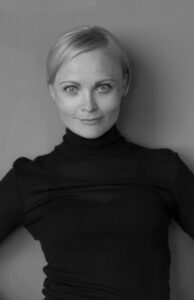
I am Kristiina Kaitala, interior architect and one of the Kakadu of the shareholders. I graduated from the Lahti Institute of Design in 2006. After that I worked for the company for several years and later became a partner in Kakadu.
I've had an interest in design since I was a child. I've always wanted to do something visual and work with people, even though at the time I didn't know that such a field existed. It was only later that I realised that these things could come together as a profession.
In recent years, the relevance of work and systems thinking has become even more important. In particular, our responsible role and a broader understanding of how environmentally damaging construction is has changed my own thinking a lot.
What kind of team do you work in and how do you many designers in your office?
Eleven interior designers work on Kakatu, three of whom are partners. We also have three graphic designers. The associates are also very much involved in client and project work, with their roles being divided according to their skills, interests and type of project.
What kind of projects do you work on?
We offer strategic real estate space and identity planning, workplace design, restaurant and housing design, and more. Our clients include private operators, the public sector and, for example, the Ministry of Foreign Affairs for various representations. In recent years, we have also extended our services to learning environments such as schools and kindergartens.
You also do real estate development, how do you see the future of vacant historic properties in central Helsinki?
It's a huge question, and I don't think I can fully answer it as an interior designer. Making use of the existing building stock is absolutely crucial - whether it is in the centre of Helsinki or not. Rather than building new, we should primarily explore the possibilities of how to use existing empty buildings in new ways and deepen our understanding of changes of use. If a building is not harmful to health, but is decided to be demolished mainly for aesthetic reasons, then surely a wider group of experts should pause to reconsider the decision.
As designers, it is our responsibility to speak about the built environment with respect. We bring out the value and story of buildings, not diminish them. A well-designed and well-argued whole makes a building attractive without the need to glue something artificial on top of it.
How do you think workspaces in Finland have developed over the last 10 years?
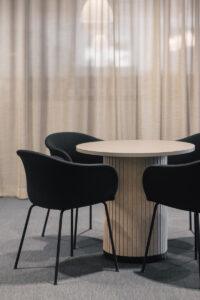
Working environments have changed a lot. Most importantly, there has been a shift away from brand-driven space design towards stronger support for organisational culture and business. The role of the interior architect is broader as an expert: gathering data, taking into account social, economic and environmental aspects, as well as the business of the property owner and tenant, and using this to develop functional space concepts in collaboration with the rest of the multidisciplinary project organisation.
Working environments have also become smaller and more adapted to support hybrid work. However, it is important to understand that spaces are only part of the whole. Equally important is how users interact with the premises, how they are supported in adapting to the new interface, and what rules of the game support the day-to-day running of the organisation - and who is responsible for maintaining them?
How do you see the teleworking culture evolving and how is it reflected in your design work?
Teleworking is here to stay, but balance is key here too. Working remotely alone often undermines community, individual wellbeing and even the quality of work - that much is clear to everyone. Well-being comes from meaningful relationships with the world around us, and well-designed spaces contribute to this thinking.
Face-to-face work is still very important, especially when solving complex problems together. Being present also gives meaning to what we do and reinforces the sense of being part of a bigger picture. And of course we all understand the benefits of working remotely. So both are needed.
In design work, this culture and approach is reflected in concrete requirements such as acoustics, soundproofing, lighting, ergonomics and technology. Spaces need to support both physical and digital interaction with high quality.
Basic human needs have not changed - I would continue to rely on the high quality of materials, functionality and overall aesthetics of spaces, whatever the direction of teleworking culture.
What role does sustainability and environmental responsibility play in your work?
Responsibility is a huge part of everything we do: it is also about being aware of your actions and their impact. Sustainability starts with a mindset and is reflected in all our planning. I see it as particularly important that planning is done in a systemic and holistic way and with an awareness of planetary boundaries.
In construction projects, work is still often too compartmentalised, when in reality the best results are achieved through cooperation between different sectors to achieve a common goal. We should better understand the big picture and make decisions based on it, not just optimise individual areas.
Environmental issues are also increasingly important to customers and end-users, but not always self-evident. It is then our job to steer the debate in the right direction. Not everything needs to be dismantled and often nothing needs to be done on the premises! Existing solutions are often perfectly usable and also more aesthetically pleasing and sustainable than new ones. It is therefore worth focusing on things that really matter to the users and the building itself.
What has been a meaningful project you have been involved in?
For me, relevance is not about the individual project, but about how we can solve the client's challenges and deliver long-term value to the client, the users, the owner and the farm as a whole. For each project, the objectives are defined together with the client. They guide the work from start to finish. The designer's role is not only to execute, but also to genuinely influence the outcome through active interaction with stakeholders.
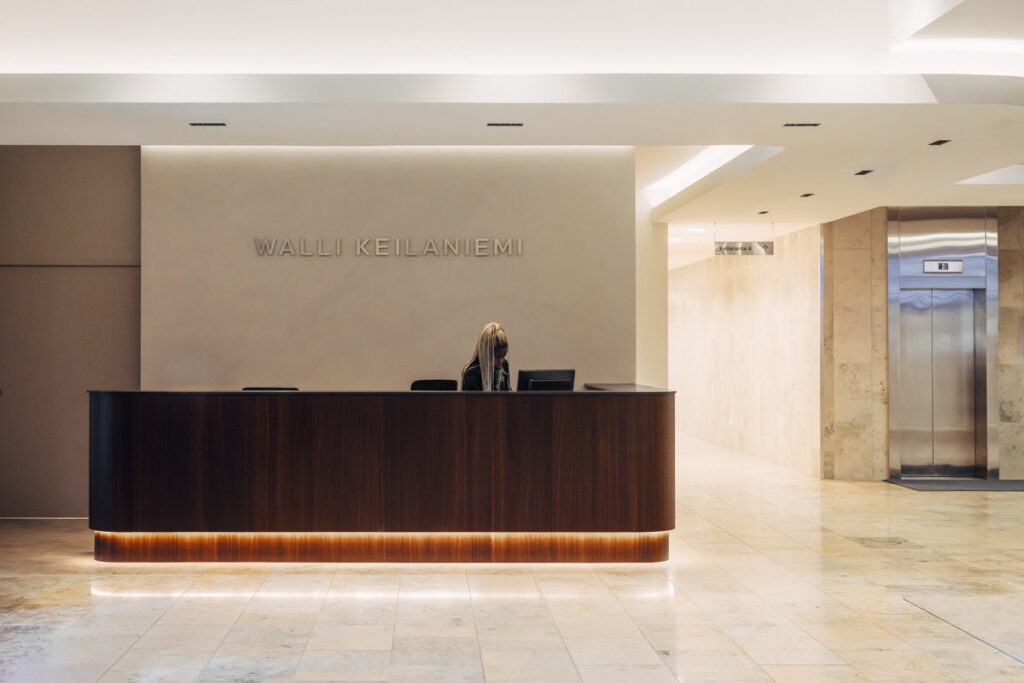
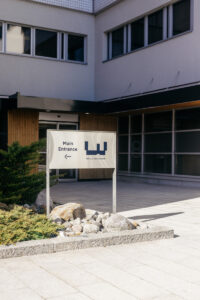
One example is the Walli office building in Keilaniemi, Espoo. Completed in 1987 and modernised in 2011, the building is a community-based multi-user facility whose visual identity and spatial context we developed from the building's own starting points.
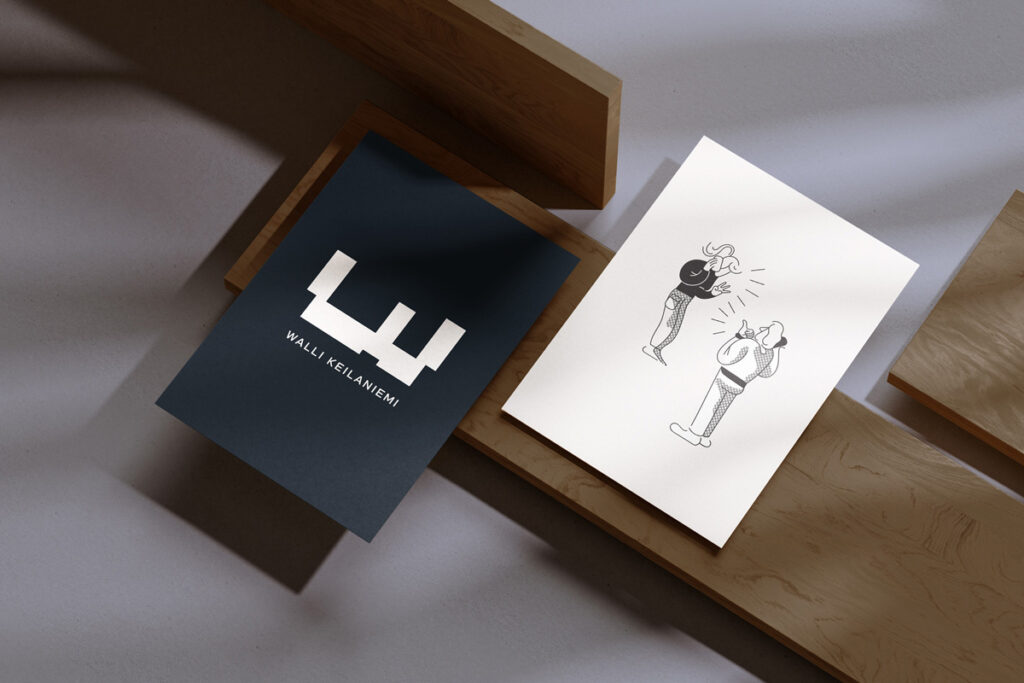
The visual identity of the project was created in collaboration with the client, based on the architecture of the building and the existing materials and atmosphere. The renewed look was incorporated into the graphic materials, lobbies and signage solutions.
The project serves as an example of how an existing property can be developed to highlight its strengths.
What are the current leading trends in workplace design in Finland?
I don't really like trend thinking, unless you're talking about megatrends. What's more important is the direction you're going in. I would like to contribute to and see more long-lasting and sustainable design, where buildings and spaces are designed to such a high quality that they do not need to be constantly modified. Spaces are put into use for their qualities and appeal, not because they are always being changed to suit a trend.
What are important to you when choosing suppliers and materials?
We value suppliers who have curated their own offerings into a high-quality and sustainable package. Not everything has to be possible and you don't always have to produce something new. It's more important to develop existing products, to focus on quality, serviceability and longevity, and to take into account factors such as locality and the origin of materials.
How do you see working environments and their design evolving in the future?
We are working ourselves to move away from short-term thinking in our industry in general. Buildings have a long life cycle and should serve multiple users without constant demolition and rebuilding. Facilities should be so well designed that they can be used for a variety of needs without major changes for decades.
AI can be a very useful tool, especially for streamlining processes and handling data. In design work, for example, its main value is that it frees up time for high-quality collaborative thinking. However, our role is always to ensure the accuracy of the final result: AI can speed up the work, but the responsibility for the content and feasibility remains with the designer.
We are releasing new parts from the designer interview series monthly. Subscribe to our newsletter to receive future interviews directly to your inbox as soon as they are published!