








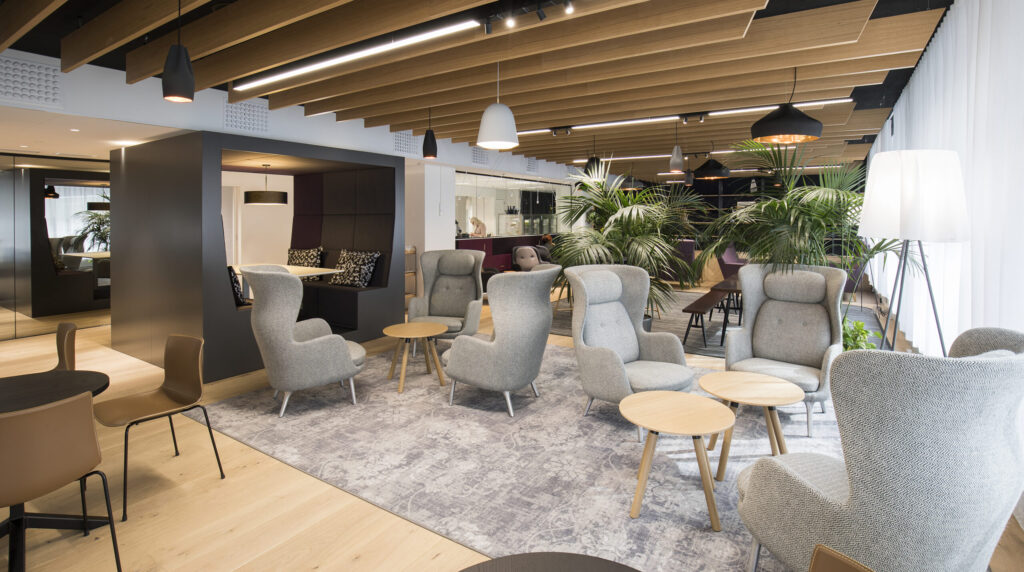
Investing in acoustic solutions for your office is worthwhile, as good acoustics improve concentration, reduce stress and increase the quality of work. A poor sound environment causes disturbances that have a negative impact on both employee well-being and productivity. Soundproof booths, Acoustic room dividers and other sound-absorbing solutions create a more functional working environment that accommodates different working styles.
Why does office acoustics affect work quality and well-being?
Office acoustics have a direct impact on how well employees can concentrate and perform their tasks. A poor sound environment causes constant interruptions, which disrupts thinking and reduces the quality of work. When sounds bounce off hard surfaces and travel freely throughout the space, they create echoes and noise that strain the mind.
Noise challenges are particularly pronounced in open-plan offices. Colleagues' phone calls, conversations and movements create background noise, which makes it difficult to perform tasks that require concentration. When an employee has to constantly filter out ambient noise, their cognitive load increases, leading to fatigue and increased stress.
Lack of privacy is another significant problem. When conversations can be heard throughout the office, employees feel more easily disturbed and may feel uncomfortable. This affects both work efficiency and overall well-being at work.
What do acoustic solutions really mean in an office environment?
Acoustic solutions are products and structures that control how sound behaves in a space. They reduce sound reflection, absorb noise and isolate sounds between different areas. The aim is to create a working environment where different working styles can coexist without disturbing each other.
Acoustic panels They are attached to walls or hung from the ceiling to absorb sound reflections. They absorb sound energy and reduce echoes, making the space more pleasant to listen and work in. The panels work particularly well in open spaces where hard surfaces would otherwise cause strong sound reflections.
Our office cubicles offer soundproofed rooms phone calls, video conferences and work that requires concentration. These enclosed spaces effectively isolate sound, allowing both the user of the booth and other employees to work without disturbance. Acoustic room dividers, on the other hand, create visual and acoustic protection in open spaces without completely closing off the space.
Ceiling elements often serve as the first line of defence against sound reflection, as the ceiling is a large surface from which sound is strongly reflected. Combining different acoustic solutions creates acoustic workstation, where the sound environment supports efficient working.
What are the most common acoustic problems in open-plan offices?
The most common acoustic problem in open-plan offices is constant conversation noise. When dozens of people work in the same space, phone calls and face-to-face conversations create background noise that disturbs others. Phone conversations are particularly disruptive because the listener can only hear the other party, making it more difficult to filter out the conversation.
The lack of privacy for work that requires concentration is another significant challenge. An open-plan office does not have any natural places to retreat to where you can work in peace without interruptions. This forces employees to either adapt to the constant noise or find temporary solutions, such as working with headphones.
Sound travelling long distances is a problem, especially in large open spaces. When there are not enough sound-absorbing elements in the space, conversations and other sounds carry far, disturbing those working at a distance. The lack of quiet zones means that there are no areas in the office where one can concentrate completely without disturbance.
Echoes and sound reflections from hard surfaces amplify all sounds and make the space acoustically unpleasant. This problem is particularly pronounced in spaces with lots of glass, concrete and other hard materials without any softening elements.
How can you tell if your office needs acoustic improvements?
The clearest sign that acoustic improvements are needed is when employees complain about noise and disturbances. If people repeatedly mention difficulty concentrating or say that the office is too noisy, the acoustics need attention. This feedback indicates a real problem that affects daily work.
Another concrete sign is the need to repeat things in conversations. If employees have to ask questions again or speak louder to be understood, the acoustics of the space are not working. This indicates that the background noise is so loud or the sound environment so poor that normal communication is difficult.
Constant interruptions and difficulty maintaining concentration are also signs of poor acoustics. When employees are unable to immerse themselves in their tasks or have to seek alternative workspaces, such as meeting rooms or cafés, the office soundproofed rooms are not sufficient.
A general feeling of discomfort in a space can indicate acoustic problems, even if the cause cannot be identified. When a space feels restless or uncomfortable, poor acoustics are often partly to blame. The fact that employees systematically seek out certain, quieter corners is also indicative of an uneven acoustic environment.
What factors affect the cost of acoustic solutions?
The size of the office has a significant impact on the cost of acoustic solutions. A large open space requires more acoustic elements than a smaller space in order to control the sound environment. The larger the area to be treated, the more sound-absorbing products and structures are needed.
The type of solution chosen affects the level of investment. Acoustic panels are generally a more affordable option than soundproof booths, which offer complete isolation and privacy. Room dividers are placed between these, providing acoustic protection without complete isolation. Each solution serves a different purpose, and the right combination depends on the needs of the office.
The quality and durability of materials are reflected in their cost. High-quality acoustic materials are more effective and last longer, making them a more cost-effective choice in the long term. Poor-quality solutions may require repair or replacement sooner.
The complexity of installation affects the overall cost. Some acoustic solutions, such as free-standing room dividers, are easy to position without any special installation. Elements that are attached to the ceiling or fixed structures may require professional assistance, which increases the cost.
Investment levels range from basic improvements to comprehensive acoustic refurbishment. A smaller investment may involve adding a few acoustic panels or room dividers to critical areas. A larger project may include multiple office cubicles, comprehensive panel solutions and room dividers that transform the acoustic environment of the entire office.
How do acoustic solutions affect the working environment in the long term?
Acoustic improvements permanently enhance the quality of the working environment. When the sound environment is under control, employees can concentrate better, which improves the quality of work and reduces errors. A pleasant acoustic environment makes the office a place where people want to work, which has a positive effect on the attractiveness of the workplace.
Employee satisfaction improves when the office provides facilities for different work needs. The opportunity to retreat soundproofed room making a phone call or concentrating on a challenging task in peace increases the feeling of autonomy and comfort at work. This is reflected in greater commitment and lower staff turnover.
Stress-related sick leave can be reduced when the working environment does not constantly put strain on employees. Chronic exposure to noise and disturbances increases stress levels, which in the long term affects health. Better acoustics reduce this strain and promote well-being.
Cooperation opportunities improve when the office has both open and isolated spaces. Acoustic solutions do not only mean silence, but also that discussions and cooperation can take place without disturbing others. This balance makes the office more efficient for both individual and team work.
High-quality acoustic solutions are durable and retain their functionality for years. They do not require constant maintenance or replacement, making them a long-term investment. Well designed office furnishing Acoustic elements also preserve the value of the space and make it more attractive to future users or tenants.
Acoustic improvements create the basis for a flexible working environment that adapts to changing needs. When the basic acoustics are in order, it is easier to further develop the office without having to fix fundamental problems. This also makes the space a more sustainable choice for the future.