








When open offices are not enough for concentration
In open offices, interruptions rarely feel dramatic. They are small, quick and often well-intentioned.
“Do you have a minute?”
“Quick question.”
“I just wanted to include you in the conversation.”
But their impact is bigger than it seems.
Interruption not only takes time, it cuts off thinking
Work is not just about time, it's about continuity. When you focus, your brain builds context, connects ideas and goes deeper.
An interruption breaks this process. When you return to the task, you don't just pick up where you left off, you rebuild the connection.
When this is repeated throughout the day, the result is not just lost minutes, but fragmented thinking. It shows up in things like:
- slower thinking
- as a lower quality job
- quiet tiredness at the end of the day
Constant noise is a burden that goes unnoticed
Instead of being able to concentrate fully, you are constantly filtering out environmental stimuli, fighting distractions and refocusing your attention.
It's subtle, but over time the effect grows. Deep work becomes shorter, thinking becomes more reactive and it becomes harder to maintain clarity.
This is not just a question of productivity, but of the quality of thinking.
Productivity needs the right cognitive conditions
Many organisations are beginning to realise that productivity is not just about tools, processes or culture. It also depends on cognitive conditions.
In practice, this often leads to a simple insight: people need to have access to spaces where they can work without interruption when they need to.

Quiet workspaces as part of the overall working environment
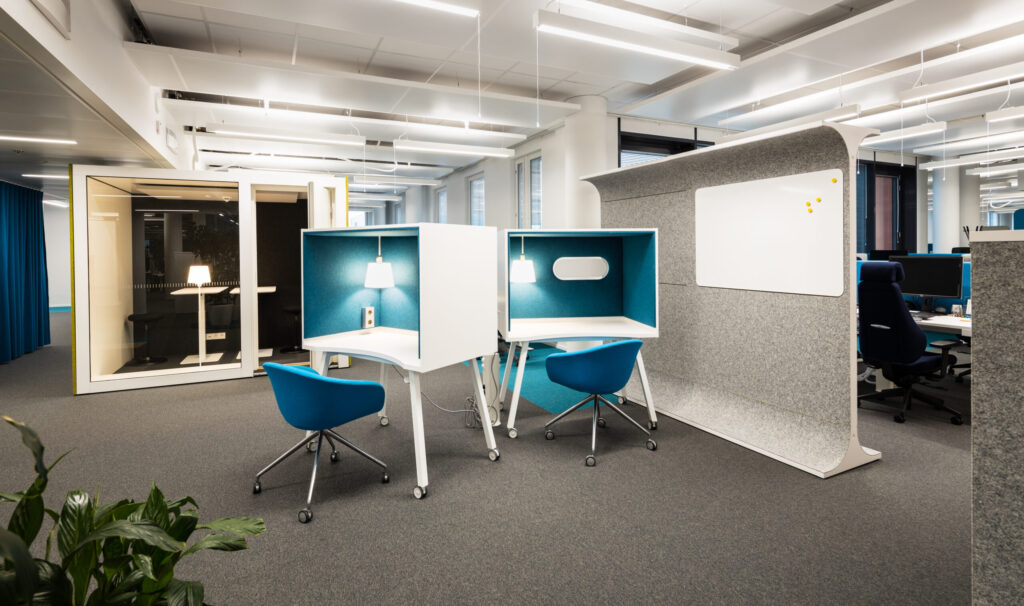
We see this reflected in how companies use INTO Concept’s quiet workspaces as part of a broader ecosystem. They provide a quiet place to focus on tasks that require concentration, and to return to collaboration when interaction is needed again.
INTO the Nordic Silence product family is designed to support this change:
- POD rooms focused work and private meetings
- Acoustic room dividers designing open spaces
- Ergonomic workstations support both collaboration and individual work tasks
Together, they enable the design of environments where different ways of working can coexist. People's performance does not depend only on how they work. It also depends on their ability to follow through on their ideas.