








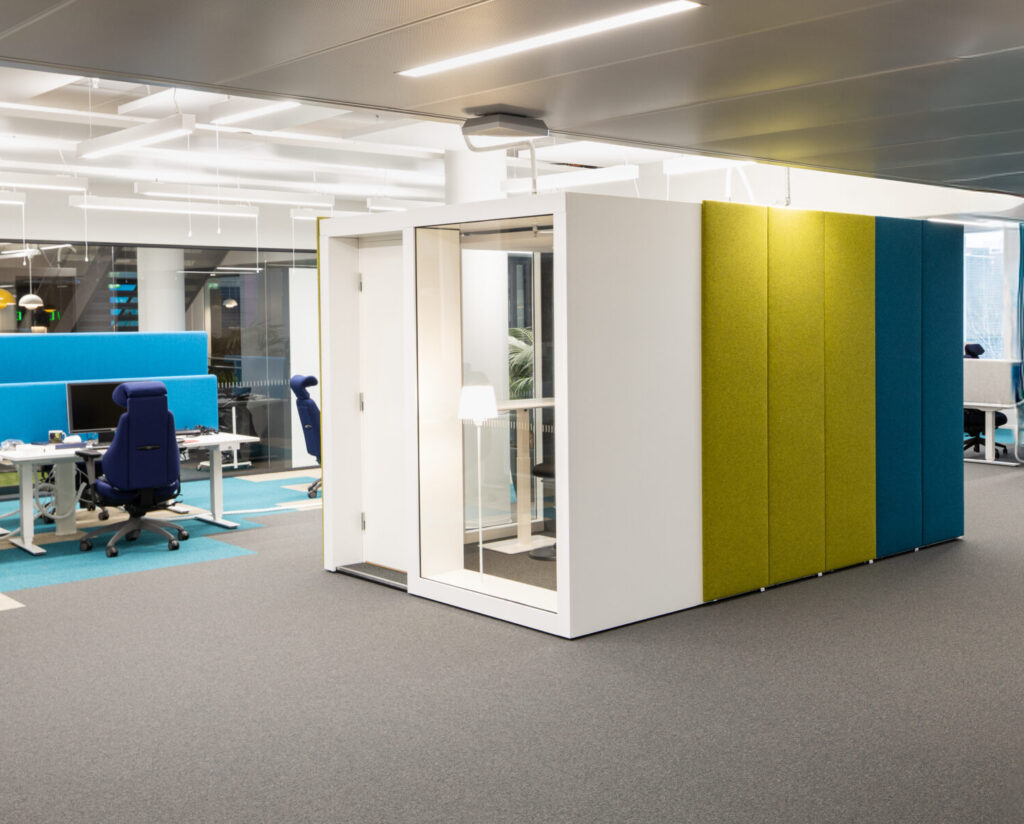
A peaceful workspace offers significant benefits for both employee well-being and organisational productivity. Quiet workspace reduces distractions, improves concentration and supports efficient working. This is particularly important in the modern working environment, where many people work in open spaces. The benefits of a quiet workspace range from cognitive performance to physical and mental health and the quality of teamwork.
What makes a peaceful workspace?
Quiet working space effective soundproofing, thoughtful space planning and minimisation of distractions are key features. The space should provide adequate privacy and visual protection, which together create a safe environment for concentrated work. In a modern working environment, these elements are often achieved through functional furniture solutions and intelligent space planning.
Soundproofing is a key factor in a quiet workspace. The room should have a low speech transmission index, which describes the intelligibility of speech outside the room. A low speech transmission index means that private conversations can take place in the room without the outside world being able to understand what is being said. This allows confidential matters to be handled and gives employees the assurance that their conversations will remain private.
Visual protection is as important as aural peace. Many people know how easily their concentration is broken when someone is standing behind them reading an email they have just written. Soundproofed workspace provides both acoustic and visual protection, creating a safe environment in which to work. A sense of privacy and security are essential factors that influence the ability of workers to immerse themselves in their tasks.
Minimising disruption requires a holistic approach. Open Offices have a wide variety of work activities in the same premises: telephony, teamwork and work requiring concentration. Working in the same space with different work profiles leads to a loss of concentration and work efficiency. This is why modern working environments need a range of different and appropriate support spaces for different work tasks.
How can a quiet workspace improve concentration and productivity?
A calm working environment significantly improves the brain's ability to process information and maintain focus. When distractions are minimised, workers can use their full cognitive capacity on the task at hand instead of constantly filtering out background noise and visual distractions. This leads to more efficient work and better performance.
Constant interruptions are particularly disruptive to demanding thought processes. When you are surrounded by loud chatter and the phone of the person sitting next to you beeps at regular intervals, it becomes almost impossible to concentrate on demanding tasks. Workers who suffer from constant interruptions experience a significant drop in productivity and quality of work.
A quiet workspace allows you to achieve a state of deep concentration, where you can fully immerse yourself in your work. This is particularly important when performing complex tasks that require constant thinking and problem solving. When a worker can work in peace and quiet, concentrating on the task at hand, the quality of work is improved and errors are reduced.
Efficiency also increases in terms of time use. When workers don't have to spend energy fighting distractions or recovering from broken concentration, they get more done in less time. This benefits both the employee and the organisation as a whole, significantly improving overall productivity.
What are the health benefits of a quiet workspace?
A peaceful working environment has a positive impact on both physical and mental well-being. When the working environment supports rest and concentration, stress levels are significantly reduced and workers experience less fatigue during the working day. This leads to an overall improvement in well-being at work and reduces sickness absence.
Stress is one of the biggest threats to well-being at work. Constant hassle and distractions cause chronic stress, which negatively affects both physical and mental health. A peaceful workspace allows employees to work without constant stress, which contributes to long-term health and well-being at work.
Reduced fatigue is another major health benefit. By not having to constantly fight distractions, workers save energy and experience less mental exhaustion. This translates into a better state of alertness during the working day and faster recovery after work. Employees who work in a calm environment often report better sleep and overall well-being.
A calm working environment can also have a positive effect on physiological indicators such as blood pressure. Chronic stress raises blood pressure and increases the risk of cardiovascular disease. When the work environment supports calm working, these risks are reduced and the overall health of the worker improves in the long term.
How does a quiet workspace affect cooperation and teamwork?
While a quiet workspace may sound like it promotes working alone, it actually improves collaboration by providing a balance between concentration and interaction. When employees have the opportunity to retreat to quiet spaces during tasks that require concentration, they come to joint meetings more refreshed and ready to actively participate.
Modern working environments need different spaces for different tasks. For team meetings, we need spaces that allow for intensive brainstorming and open discussion. These need to be complemented by quiet areas to work on ideas and prepare presentations. Having both types of space available will significantly enhance teamwork.
The existence of quiet areas supports the whole work community by creating a culture that understands the demands of different work tasks. Employees learn to value both collaboration and focused individual work. This leads to greater mutual respect and an understanding of when a colleague needs peace and when they are available for interaction.
When employees can choose where they work according to the task, they take more responsibility for their own work and the team's results. This autonomy increases commitment and motivation, which is positively reflected in the performance of the team as a whole. So providing quiet spaces does not reduce collaboration, but makes it more qualitative and meaningful.
The benefits of a quiet workspace are undeniable in today's working life. They improve concentration, productivity and well-being at work while supporting effective teamwork. Investing in peaceful workspaces is an investment in the health of your employees and the success of your organisation. The design of the working environment should therefore take into account the requirements of different job roles and allow employees to choose the most appropriate workplace for the task at hand.