







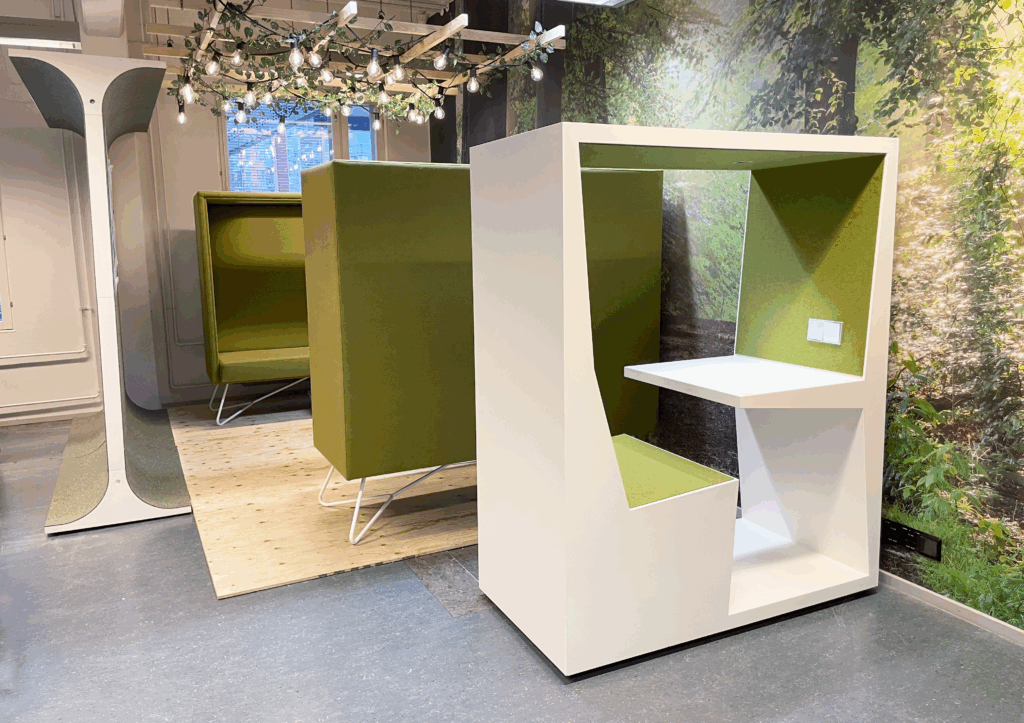
Multi-storey office is a modern office concept that offers a variety of workspaces within a single office. It combines open collaboration areas, quiet meeting spaces, meeting rooms and social areas to meet the varying needs of employees. This flexible approach improves well-being and productivity by allowing the choice of the right working environment for the job.
What is a multi-office and how does it differ from a traditional open office?
A multi-space office contains a number of different workspaces designed for different tasks. Workers can move from one space to another during the day, depending on the type of work they are doing. This is different from a traditional open office, where everyone works in the same environment.
A traditional open office consists mainly of one large space with workstations next to each other. In a multi-purpose office, on the other hand, there are separately defined areas for different purposes. Quiet space is one of the most important elements, as it allows deep concentration on demanding tasks.
Compared to closed individual offices, a multi-user office promotes collaboration and interaction. However, it offers more privacy and tranquillity than a completely open space. Employees can decide for themselves when they need social interaction and when they need a quiet working environment.
What kind of facilities are there in a multifunctional office and what are they used for?
A multi-space office is divided into several different types of space, each with its own purpose. Concentration areas and quiet spaces is reserved for tasks that require deep thinking, such as writing reports or doing analysis. These areas are usually located in the quieter parts of the office.
The collaboration spaces are designed for group work. They can be open areas where teams can work together on projects. Phone booths provide a private space for calls and video conferencing without disturbing other employees.
Meeting rooms range from small boardrooms to larger conference rooms. Social areas, such as coffee rooms and lunch areas, encourage informal interaction between employees. These spaces help build a sense of community and improve the working atmosphere.
What are the main benefits of a multifunctional office for employees and the company?
The main benefits of a multifunctional office are flexibility, which improves workers' productivity and well-being. When people can choose their working environment according to their tasks, they can work more efficiently. Concentrative tasks are more successful in quiet spaces, while creative collaboration flourishes in more open environments.
For a company, a multifunctional office offers cost efficiency, as space is used more efficiently. Individual workstations are not reserved for specific people, but are available to all as needed. This allows for a smaller overall floor space requirement.
Well-being at work improves when employees feel they can influence their working environment. Being able to change rooms during the day reduces stress and increases job satisfaction. Cooperation naturally improves when people meet each other in different spaces and situations.
How to design a multifunctional and efficient office?
Designing a good multifunctional office starts with identifying the needs of your employees. It is important to understand the types of tasks that will be carried out in the organisation and how much different types of space will be needed. The sizing of the space is based on the number of users and the way they work.
Technology is a key part of design. Each space must be equipped with the necessary connectivity and devices. Wireless internet, electrical outlets and presentation technology must be easily accessible in all workspaces.
Access routes must be designed to be smooth, so that it is easy to move between the premises. Clear signage helps employees find the right space quickly. Furniture should be ergonomics and easily adaptable for different uses. Adjustable tables and chairs allow comfortable working for all users.
The success of a multi-tenant office depends on careful planning and understanding the needs of the users. When designed correctly, the space will significantly improve both employee wellbeing and business productivity.