








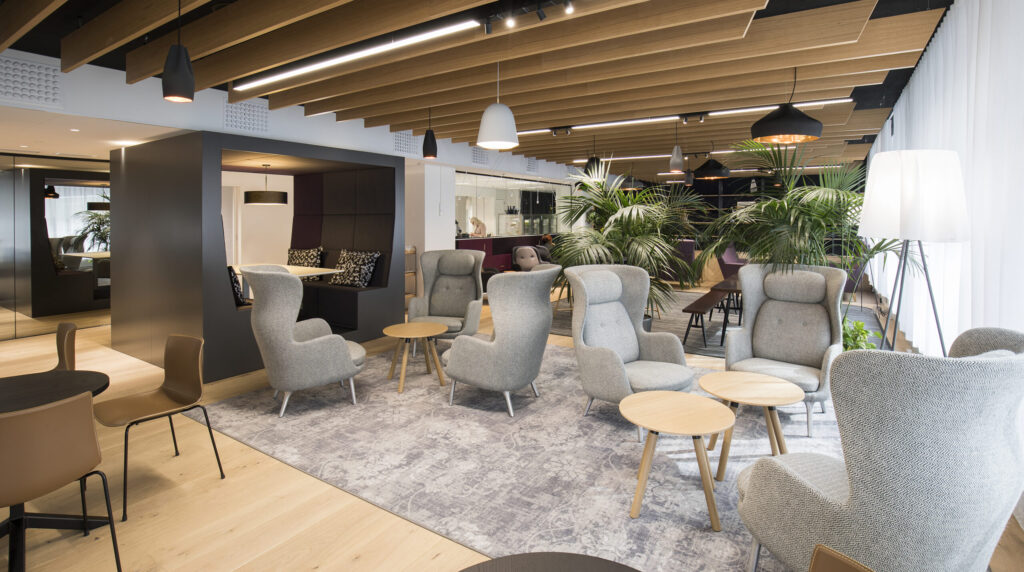
Soundproof booths and acoustic workstations differ fundamentally in terms of their operating principles. Soundproof booths prevent sound from entering and leaving the space through physical structures, while acoustic workstations focus on sound absorption and echo reduction in open spaces. A soundproofed space creates complete silence and privacy, while an acoustic workstation improves the sound environment without complete isolation. The choice between the two depends on the need for privacy, the nature of the work tasks and the objectives of the office furnishing.
What does a soundproof booth mean and when is it needed?
A soundproof booth is an enclosed space that prevents sound from travelling from inside the booth to the outside and vice versa. These booths are constructed from special materials and structures that form a physical barrier to sound. Soundproofing works by preventing sound waves from passing through the structure, creating complete silence and privacy inside the booth.
Soundproof enclosures are needed in situations where complete privacy is essential. Confidential phone calls, video conferences and tasks that require concentration benefit greatly from a completely isolated space. When an employee needs an environment where outside noise does not interfere and their own conversations cannot be heard outside, a soundproofed space is the right solution.
In telephone booths, sound insulation quality is measured by speech transmission index, which indicates how well speech can be understood outside the booth. High-quality telephone booths achieve a speech transmission index of between 0.10 and 0.15, which means that speech is difficult to understand outside the booth. This ensures the necessary privacy and allows confidential matters to be dealt with in peace.
What is an acoustic workstation and how does it differ from a soundproof booth?
An acoustic workstation is a semi-open work area that dampens sound and reduces echo rather than completely isolating the sound. These workstations utilise sound-absorbing materials, such as felt surfaces, which absorb sound energy and reduce reflected sound in open spaces. An acoustic workstation improves speech clarity and creates a semi-private area without complete enclosure.
The fundamental difference between an acoustic workstation and a soundproof booth is in their operating principles: an acoustic workstation absorbs sound, while a soundproof booth blocks it. An acoustic workstation does not create a completely silent space, but improves the sound environment by reducing echo and background noise. It provides visual protection and improves concentration, but does not guarantee the same level of privacy as a closed, soundproofed space.
Acoustic workstations are suitable for situations where employees need a quieter environment without being completely isolated. They reduce distractions and improve working conditions in open-plan offices, but are not suitable for confidential discussions or situations where complete silence is essential.
Which solution is more suitable for an open-plan office?
The right solution for an open-plan office depends on the nature of the work and privacy requirements. Soundproof booths are best suited for situations where employees regularly make confidential phone calls, participate in video conferences or need complete silence for demanding work. Acoustic workstations, on the other hand, are better suited to improving overall concentration and provide semi-private areas for daily work.
When planning office furnishings, it is a good idea to assess how many employees regularly need a completely quiet space. If confidential discussions are a daily occurrence, soundproof booths are essential. If, on the other hand, the main challenge is the general level of background noise and difficulty concentrating, acoustic workstations can solve the problem more cost-effectively.
In terms of space utilisation, acoustic workstations are more flexible and take up less space than enclosed cubicles. They enable a more open working environment to be maintained while improving acoustics. Soundproofed rooms require more floor space, but offer the highest level of privacy and complete silence.
In many open-plan offices, the best solution is a combination of both: soundproof booths for important calls and meetings, and acoustic workstations for everyday work. This approach meets a variety of needs and maximises both privacy and collaboration opportunities.
How do I choose the right solution for my work environment?
Choosing the right solution starts with assessing the noise level and privacy needs of the work environment. Find out how often employees need a completely quiet space and what kind of tasks they perform on a daily basis. If confidential phone calls and video conferences are a regular occurrence, a soundproof booth is a necessary investment. If the main problem is general background noise, an acoustic workstation may suffice.
Employees' working patterns have a significant impact on the choice. Teams that collaborate a lot but occasionally need privacy benefit from the flexibility offered by soundproof cubicles. Employees who mainly work independently but suffer from background noise will benefit more from acoustic workstations.
When planning the use of space, it is important to assess the available floor space and layout options. Soundproof cubicles require more space and a more fixed layout, while acoustic workstations offer greater flexibility. Also consider how the solution will integrate with the existing office design and aesthetics.
When making practical decisions, it is advisable to test both options, if possible. Assess how employees use the premises and what kind of solution will actually improve their working conditions. Focus on a solution that addresses real challenges rather than choosing based solely on trends. The right choice will improve both employee well-being and productivity in the long term.