








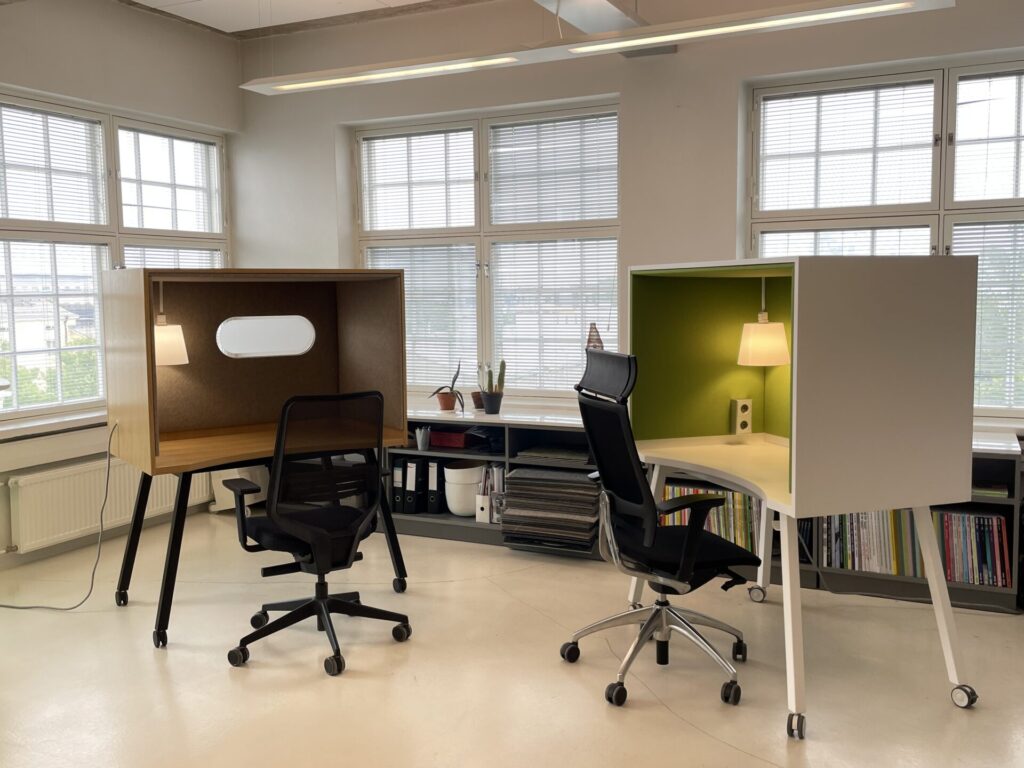
The absence of distractions in the working environment is becoming an increasingly important factor in staff well-being. A peaceful workspace reduces stress levels, improves concentration and increases work efficiency. Research shows that a distraction-free working environment enhances well-being at work, which is directly reflected in satisfaction. Employees who can concentrate on their tasks without constant interruptions feel that their work is more meaningful and are more committed to their organisation.
Why does a peaceful workspace increase employee satisfaction?
A peaceful working environment has many effects on the well-being of workers. Research shows that working in a quieter environment significantly reduces the production of stress hormones. Concentration improves as external distractions are minimised, leading to better job performance and increased job satisfaction.
According to a study conducted by the University of Helsinki, the acoustics of the work environment have a direct link to the well-being of employees. Constant interruptions and environmental noise can lead to cognitive stress, which takes an average of 23 minutes to recover from. This has a direct impact on work performance and ultimately on employee satisfaction.
Experts stress that a peaceful working environment is particularly important for tasks requiring concentration. The possibility for workers to choose the right workplace for the task - a quiet space for concentration tasks or a collaborative space for teamwork - increases a sense of control, which is a key factor for well-being at work.
How does a noisy working environment affect workers' performance?
Working in a noisy environment significantly impairs cognitive function. Studies show that background noise can reduce job performance by up to 66%, especially in tasks that require concentration and accuracy. Constant interruptions fragment the working day and cause stress, affecting both the quality and quantity of work.
In open offices, it is the sound of speech that causes the most disturbance, because our brains are wired to process speech automatically. This means that even if we are not consciously listening to conversations, our brains use resources to process them. This distraction leads to poor concentration and an increased number of errors.
In the long term, a noisy working environment can lead to chronic stress and job fatigue. The National Institute for Occupational Health has found that continuous exposure to noise can cause increased blood pressure, headaches and sleep problems. These factors have a direct impact on absenteeism and employee turnover, which in turn negatively affects organisational performance and results.
Which acoustic solutions work best in open offices?
There are a number of effective solutions for improving the acoustics of open offices. Sound absorbing panels on walls and ceilings effectively reduce echo and absorb disturbing sounds. Acoustic baffles between workstations create privacy and reduce sound transmission from one workstation to another.
Acoustic ceiling panels are one of the most effective ways to improve the sound environment in a room, as they reduce the reflection of sound from hard surfaces. When combined with appropriate flooring materials, an acoustically comfortable working environment can be created that supports both concentration and, where necessary, collaboration.
Soundproofed phone booths and retreats provide a quiet place to concentrate on tasks or make confidential calls. Studies show that adding these spaces to open offices can improve employee satisfaction with their working environment by up to 40%. POD rooms are an excellent example of a space that provides a peaceful place to work without distractions.
How does workspace design affect employee interaction?
The layout of the workspace largely determines how workers communicate and collaborate. A well-designed work environment balances the needs for privacy and collaboration, enabling both effective teamwork and individual work that requires concentration.
The layout of collaboration areas in the workspace is critical. Open, accessible collaboration spaces encourage spontaneous encounters and the exchange of ideas. At the same time, it is important that these areas are sufficiently separated from quiet workspaces so that the sounds of collaboration do not distract from work that requires concentration.
A balance of quiet workspaces and meeting places creates a well-functioning work community. Research shows that organisations that offer a variety of workspaces to meet different needs report higher employee satisfaction and greater innovation. Employees value the ability to choose the most appropriate workplace for their role, which increases their sense of autonomy and thus job satisfaction.
What ergonomic factors should be taken into account when designing a quiet workspace?
Ergonomics and a peaceful working environment go hand in hand. Adjustable workstations, such as height-adjustable desks and ergonomic seating, provide a comfortable and healthy working position, reducing physical stress and improving concentration.
Lighting is a key ergonomic factor. Proper, glare-free lighting reduces eye strain and headaches, which in turn helps to maintain concentration. Ideally, lighting should be adjustable to the individual needs of workers.
Temperature and air quality have a significant impact on cognitive function and comfort. Research shows that the optimum office temperature is between 21 and 23 degrees Celsius, and adequate ventilation keeps carbon dioxide levels low, which promotes alertness and concentration. A holistic approach that takes into account both physical ergonomics and the sound environment creates the best conditions for employee well-being and productivity.
Creating a peaceful working environment - the key to better well-being at work
Understanding that a healthy working environment is not a luxury but a necessity is key to employee satisfaction. Careful acoustic design, workspace structuring and ergonomic solutions form a whole that supports employee well-being and productivity in a variety of ways.
We have found that the balance between focus and collaboration is best achieved by providing different spaces to meet different needs. For work that requires intense concentration, soundproofed spaces are indispensable, while more open areas are needed for brainstorming and collaboration.
We encourage organisations to pay attention to the quality of their working environment as an investment that pays off in terms of improved well-being and productivity. Modern, functional workspace solutions take into account acoustics, ergonomics and the social needs of the work community.
Take a look at a our references and be inspired by the projects that have been implemented - contact us, and together we will find the solution that suits you best!