








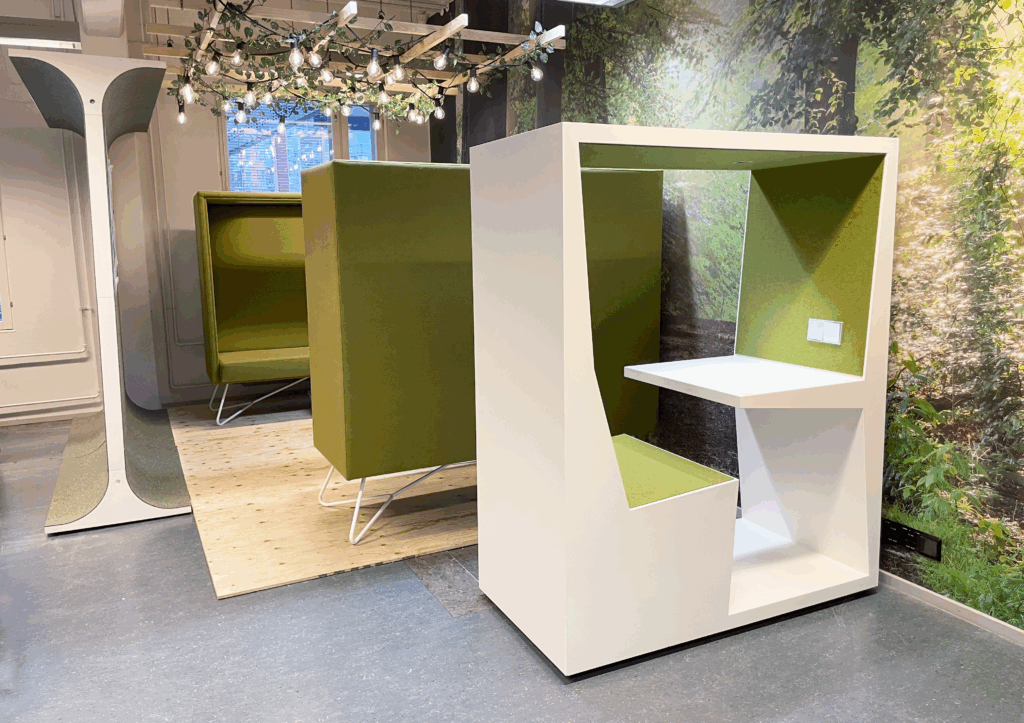
Office furniture has a significant impact on sound insulation and acoustics. The right furniture solutions can reduce background noise, improve speech intelligibility and create a calmer working environment. Soundproofed room is achieved through careful choice of materials and placement of furniture that effectively absorbs and directs sound.
Why does office acoustics affect well-being and productivity?
Poor acoustics disturb concentration, increase stress and significantly reduce work efficiency. In open offices, background noise and distracting sounds force workers to struggle to hear speech and maintain concentration, which drains mental resources.
Too loud a soundscape causes fatigue and irritation during the working day. Workers experience stress when they are unable to isolate themselves from distracting sounds or when they have to speak louder to be heard. If prolonged, this has a negative impact on work motivation and general well-being.
Good acoustics support both collaboration and individual work. When sound levels are under control, employees can concentrate better on their tasks and communicate clearly with each other. This improves the quality of work, reduces errors and increases overall satisfaction with the working environment.
How do different types of furniture affect the sound conditions in the office?
The materials and shapes of furniture have a direct impact on how sound behaves in a room. Hard surfaces such as glass, metal and polished wood reflect sound and create echoes. Soft materials absorb sound and reduce distracting background noise.
Upholstery and textiles on furniture act as natural sound absorbers. Work chairs with thick padding and sofas absorb sound better than hard wooden surfaces. Similarly, bookshelves full of books act as excellent sound absorbers thanks to their irregular surfaces.
Space dividers are particularly effective at managing the sound environment. They not only visually divide the space, but also control and attenuate sound. High partitions can create acoustic zones where sound does not travel as easily between different workstations.
Acoustic properties of materials
Porous materials, such as upholstery and acoustic fabrics, absorb sound. Solid, smooth surfaces, on the other hand, reflect sound back into the room. Wood surfaces lie between these extremes - absorbing some frequencies and reflecting others.
What are the most effective furniture solutions for noise reduction in the office?
Phone booths and PODs are the most effective solutions for noise reduction in the office. They create a completely soundproofed room for private calls and tasks that require concentration. These solutions prevent sound from spreading to the rest of the office and protect the user from external interference.
Acoustic partitions offer a more flexible alternative to complete soundproofing. They reduce the spread of sound between workstations without creating completely enclosed spaces. Higher partitions are more effective than lower ones, as they prevent sound from travelling even when the user is standing.
Specialised furniture, such as acoustic panels and sound-absorbing workstations, integrate noise reduction into the normal office furniture. These solutions are practical because they serve both functional and acoustic needs at the same time.
Easy-to-use solutions
Portable acoustic baffles allow for flexible space planning. They can be placed where noise control is most needed at any given time. Desks with integrated acoustic panels provide personal soundproofing without major changes to the office layout.
How to design office furniture for optimal acoustics?
Achieving optimal acoustics requires a holistic approach to furniture placement and material choices. Start by identifying the sound sources in the office and the areas where quiet working is most important. Locate noise-generating functions such as printers and coffee machines away from quiet work zones.
Create acoustic zones by using furniture strategically. High bookshelves and partitions can act as sound barriers between different activity areas. Design office furniture in a way that supports the natural sound environment - for example, meeting rooms benefit from sound-absorbing furniture, while collaboration areas can tolerate a little more sound reflection.
Combine different materials in a balanced way. Too many hard surfaces can make a space resonate, while too many soft materials can make a space feel ”dead”. Aim for a balance where the sound sounds natural but not distracting.
Practical tips for layout design
Avoid long, straight corridors where sound can travel unimpeded. Break up sound paths by staggering furniture. Take advantage of the height of the room by also placing sound-absorbing elements on walls and ceilings, where possible.
Improving office acoustics through furniture is an effective way to create a more pleasant and productive working environment. The right furniture solutions not only reduce noise, but also improve communication and well-being. Good acoustics is an investment that pays off in terms of improved work performance and reduced sick leave.